


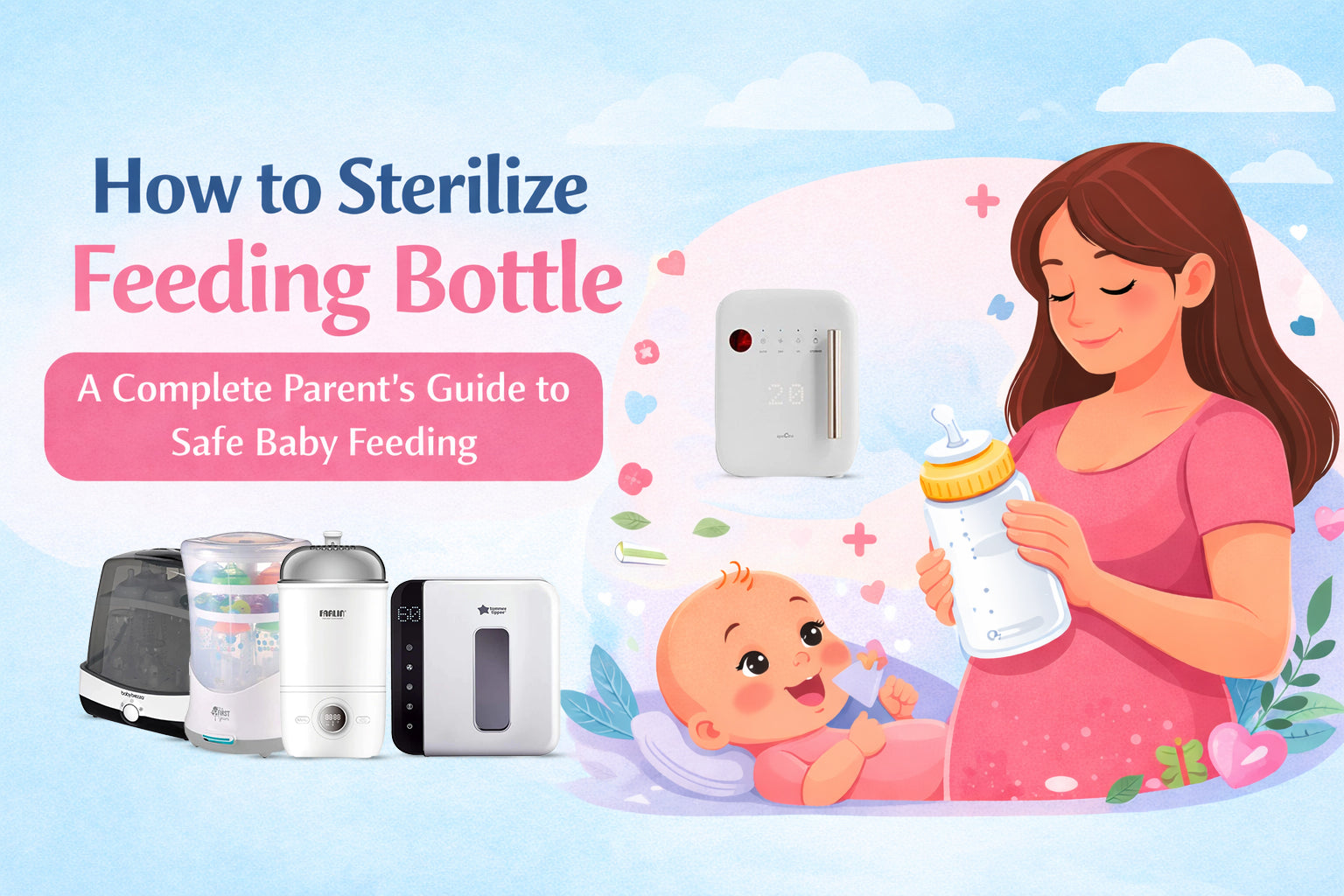
كيفية تعقيم زجاجة الرضاعة: دليل شامل للوالدين لضمان رضاعة آمنة للطفل
يبدأ الحفاظ على صحة طفلك بما يدخل إلى معدته الصغيرة. ومن أهم جوانب العناية بالمولود الجديد، والتي غالباً ما يُساء فهمها، تعلّم كيفية تعقيم زجاجة الرضاعة بشكل صحيح. سواء كنت والداً لأول مرة أو تستقبل مولوداً جديداً في عائلتك، فإن فهم تعقيم زجاجات الرضاعة أمر أساسي للوقاية من العدوى وضمان رضاعة آمنة لطفلك منذ اليوم الأول.
في هذا الدليل الشامل والمناسب للوالدين، ستتعرف على أهمية تعقيم زجاجات الرضاعة، وعدد المرات التي يجب القيام بذلك فيها، وأأمن الطرق التي يمكنك اتباعها في المنزل بكل ثقة.
ماذا يعني تعقيم زجاجة الرضاعة؟
يعني تعقيم زجاجة الرضاعة إزالة البكتيريا الضارة والجراثيم والكائنات الدقيقة من الزجاجات والحلمات والأغطية وغيرها من ملحقات تغذية الطفل. يمتلك حديثو الولادة جهازاً مناعياً لا يزال في طور النمو، مما يجعلهم أكثر عرضة للإصابة بالعدوى الناتجة عن معدات الرضاعة الملوثة.
في حين أن الغسيل العادي يزيل بقايا الحليب والأوساخ الظاهرة، فإن تعقيم زجاجات الرضاعة يذهب خطوة أبعد من ذلك من خلال القضاء على البكتيريا التي لا يمكن رؤيتها بالعين المجردة. وتُعد هذه الحماية الإضافية مهمة بشكل خاص خلال الأشهر الأولى من حياة الطفل.
لماذا من المهم تعقيم زجاجات الرضاعة؟
يكون حديثو الولادة والرضع الصغار أكثر عرضة للإصابة بالتهابات المعدة والإسهال والتقيؤ. وحتى الكميات البسيطة من الحليب المتبقية داخل الزجاجة يمكن أن تصبح بيئة مثالية لنمو البكتيريا إذا لم يتم تنظيفها وتعقيمها بشكل صحيح.
يساعد تعقيم زجاجات الرضاعة بشكل صحيح على حماية الأطفال من البكتيريا الضارة، وتقليل خطر الإصابة بالعدوى الهضمية، والحفاظ على نظافة زجاجات الرضاعة، ومنح الوالدين راحة البال خلال كل رضعة.
كم مرة يجب تعقيم زجاجات الرضاعة؟
خلال مرحلة حديثي الولادة، يُوصى بتعقيم زجاجات الرضاعة قبل كل استخدام. ومع نمو طفلك وازدياد قوة جهازه المناعي، قد يكون تعقيم الزجاجات مرة واحدة يومياً كافياً، بشرط غسلها جيداً بعد كل رضعة.
ويجب دائماً إجراء التعقيم قبل أول استخدام، وبعد المرض، وعندما تكون الزجاجات مخزنة لفترة طويلة، وكذلك للأطفال الخدج أو الأطفال الأكثر عرضة للمشكلات الصحية.
الأشياء التي تحتاجها قبل تعقيم زجاجات الرضاعة
قبل تعلّم كيفية تعقيم زجاجات الرضاعة في المنزل، تأكد من تجهيز كل ما تحتاج إليه. فالتعقيم لا يُغني أبداً عن التنظيف الصحيح.
ستحتاج إلى زجاجات رضاعة نظيفة، وحلمات الرضاعة، والأغطية، والحلقات، وماء نظيف، وفرشاة تنظيف الزجاجات، ومنطقة أو حاوية نظيفة للتجفيف.
كيفية تعقيم زجاجة الرضاعة باستخدام الماء المغلي
يُعد الغلي من أكثر طرق تعقيم زجاجات الرضاعة التقليدية والموثوقة، ولا يتطلب أي معدات خاصة.
أولاً، اغسل جميع زجاجات الرضاعة وأجزائها جيداً. ضع الزجاجات والحلمات والملحقات داخل قدر كبير واغمرها بالكامل بالماء. اترك الماء حتى يصل إلى الغليان الكامل واتركه يغلي لمدة لا تقل عن خمس دقائق. ثم أطفئ النار واترك الماء يبرد قليلاً، وبعد ذلك أخرج الأدوات باستخدام ملقط نظيف. ضعها على سطح نظيف واتركها تجف في الهواء.
تحقق دائماً من تعليمات الشركة المصنعة للتأكد من أن الزجاجات والحلمات آمنة للغلي.
كيفية تعقيم زجاجة الرضاعة باستخدام أجهزة التعقيم بالبخار
تُعد أجهزة التعقيم بالبخار خياراً شائعاً للوالدين الذين يبحثون عن طريقة سريعة وفعالة لتعقيم زجاجات الرضاعة. فهي تستخدم البخار عالي الحرارة للقضاء على الجراثيم بكفاءة.
وتتوفر أجهزة تعقيم بالبخار كهربائية وأخرى مخصصة للميكروويف. بعد غسل الزجاجات والأجزاء المختلفة، قم بترتيبها داخل جهاز التعقيم، وأضف كمية الماء الموصى بها، ثم شغّل دورة التعقيم. كما يساعد إبقاء الغطاء مغلقاً في الحفاظ على التعقيم لعدة ساعات.
كيفية تعقيم زجاجة الرضاعة باستخدام محلول التعقيم
يعتمد التعقيم الكيميائي على استخدام محاليل أو أقراص تعقيم مخصصة، ويُعد خياراً مفيداً أثناء السفر أو عندما لا يكون الغلي ممكناً.
املأ حاوية نظيفة بالماء البارد، وأضف محلول التعقيم وفقاً للتعليمات، ثم اغمر جميع أجزاء الزجاجة بالكامل. تأكد من عدم وجود فقاعات هواء محبوسة داخل الزجاجات. اترك الأدوات مغمورة للمدة الموصى بها، ثم أخرجها باستخدام يدين نظيفتين أو ملقط نظيف.
هل يمكن تعقيم زجاجات الرضاعة في غسالة الصحون؟
يتساءل الكثير من الآباء والأمهات عما إذا كانت غسالات الصحون يمكن أن تحل محل تعقيم زجاجات الرضاعة. تقوم غسالات الصحون بتنظيف الزجاجات بشكل جيد، ولكن ليست جميعها تصل إلى درجات حرارة مرتفعة بما يكفي للتعقيم.
إذا كانت غسالة الصحون تحتوي على دورة تعقيم وكانت زجاجات الرضاعة الخاصة بطفلك آمنة للاستخدام في غسالة الصحون، فقد تكون هذه الطريقة مناسبة للأطفال الأكبر سناً. أما بالنسبة لحديثي الولادة، فلا تزال طرق التعقيم التقليدية هي الموصى بها.
الأخطاء الشائعة التي يرتكبها الوالدان أثناء تعقيم الزجاجات
تشمل بعض الأخطاء الشائعة تجاهل غسل الزجاجات قبل التعقيم، ولمس الزجاجات المعقمة بأيدٍ غير مغسولة، واستخدام زجاجات متشققة أو تالفة، وترك الزجاجات مكشوفة بعد التعقيم.
كما أن استبدال الحلمات والزجاجات البالية بشكل منتظم لا يقل أهمية عن تنظيفها بالشكل الصحيح.
إلى متى يجب الاستمرار في تعقيم زجاجات الرضاعة؟
يوصي معظم أطباء الأطفال وخبراء الرعاية الصحية بتعقيم زجاجات الرضاعة حتى يبلغ الطفل ما بين ٦ إلى ١٢ شهراً على الأقل. ومع بدء الأطفال بالحبو ووضع الأشياء في أفواههم، تقل المخاطر المرتبطة بالزجاجات غير المعقمة.
ومع ذلك، يجب أن يظل الحفاظ على مستوى عالٍ من النظافة في زجاجات الرضاعة أولوية دائمة.
نصائح للتخزين الآمن بعد التعقيم
يلعب التخزين الصحيح دوراً مهماً في ضمان رضاعة آمنة للطفل. قم بتخزين الزجاجات المعقمة داخل حاوية نظيفة ومغلقة، ولا تقم بتركيب الزجاجات إلا عند الحاجة إليها، وتجنب لمس الحلمات دون داعٍ.
إذا تم تخزين الزجاجات دون تغطية، فمن الأفضل استخدامها خلال ٢٤ ساعة.
الأسئلة الشائعة حول تعقيم زجاجات الرضاعة
هل التعقيم ضروري للأطفال الذين يرضعون حليب الأم؟
نعم، إذا تم استخدام الزجاجات لحفظ أو تقديم الحليب المسحوب من الأم، فإن التعقيم يظل ضرورياً.
هل يمكن أن يؤدي التعقيم إلى تلف الزجاجات؟
قد يؤدي التعرض المتكرر للحرارة العالية إلى تآكل الزجاجات مع مرور الوقت. لذلك احرص دائماً على اتباع تعليمات الشركة المصنعة.
هل التجفيف بالهواء أفضل من التجفيف بالمنشفة؟
نعم، لأن التجفيف بالهواء يقلل من خطر انتقال التلوث من المناشف.
الخاتمة
إن تعلّم كيفية تعقيم زجاجة الرضاعة بشكل صحيح يُعد جزءاً أساسياً من الحفاظ على سلامة طفلك وصحته. سواء اخترت الغلي أو التعقيم بالبخار أو استخدام محاليل التعقيم، فإن الاستمرارية والنظافة هما مفتاح النجاح.
ومن خلال اتباع طريقة تعقيم زجاجات الرضاعة المناسبة لنمط حياتك والحفاظ على معايير النظافة الجيدة، يمكنك توفير تجربة رضاعة آمنة لطفلك كل يوم والتركيز على الاستمتاع بأشهره الأولى الثمينة.