


Why Is My Baby Refusing Solid Foods? Common Reasons & What Parents Can Do
Is your baby refusing solid foods? Learn the common reasons behind food refusal, from unfamiliar textures and teething to tiredness and feeding pressure, plus practical tips to help your baby become more comfortable with solids.
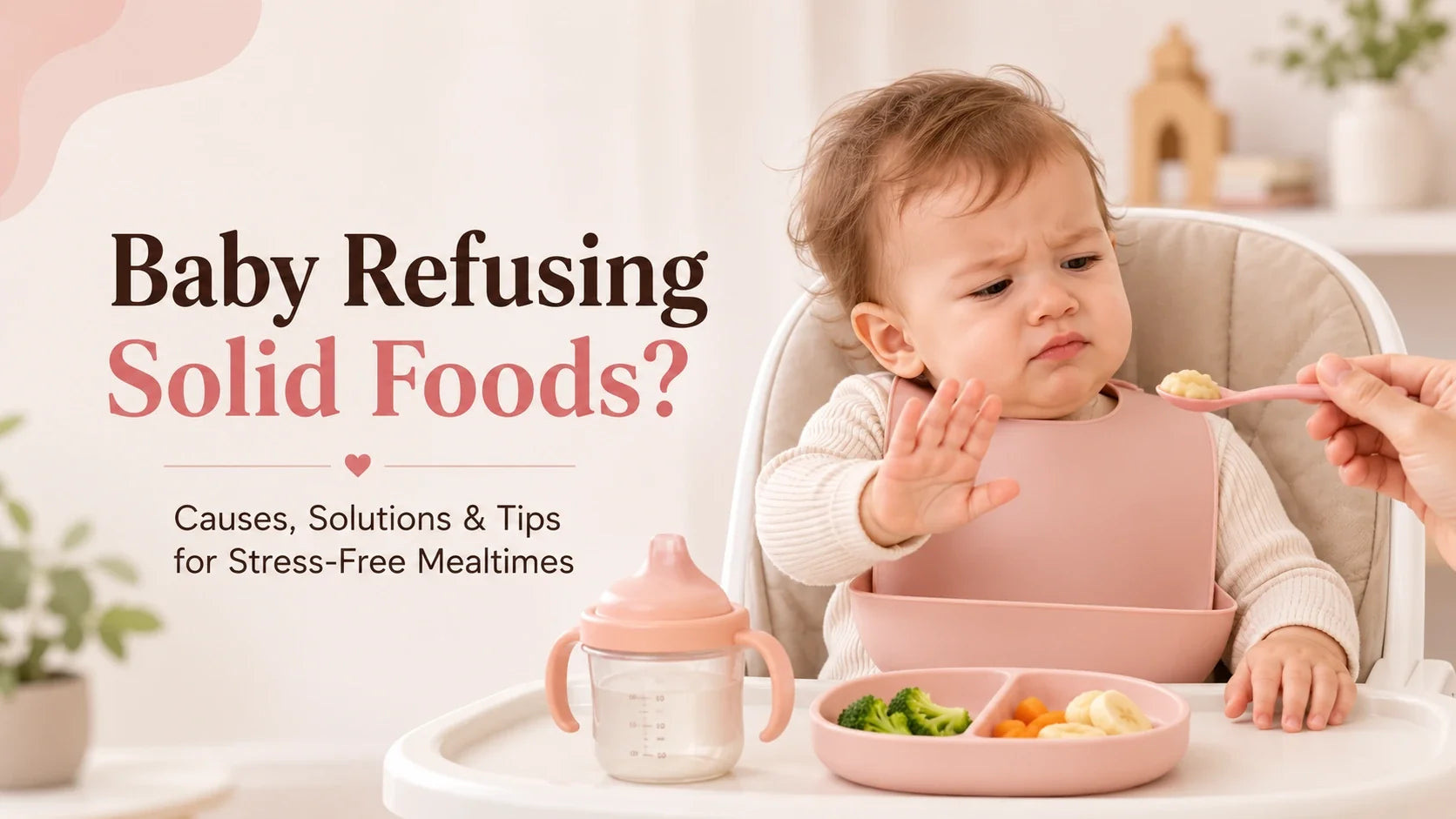
Starting solid foods can feel exciting until your baby suddenly refuses everything you offer. One day they may happily taste a spoonful, and the next they turn their head, close their mouth, or push the food away. If your baby is refusing solid foods, it does not necessarily mean something is wrong.
Food refusal is common when babies are learning to eat. New tastes, textures, smells, and the physical skill of moving food around the mouth all take time to get used to. The key is understanding why your baby may be refusing food and knowing when to keep offering it versus when to speak with your pediatrician.
Why Is My Baby Refusing Solid Foods?
There are several reasons a baby may suddenly lose interest in solids. Sometimes the issue is simply that they are still learning, while in other cases teething, tiredness, constipation, illness, or an uncomfortable feeding routine can make eating less appealing.
Common reasons include:
- Your baby is still getting used to new textures and tastes.
- The food is too difficult to chew or manage.
- Your baby is tired, distracted, or not hungry at mealtime.
- Teething is making the mouth uncomfortable.
- Your baby prefers breast milk or formula because it is familiar.
- They are experiencing constipation or another temporary digestive issue.
- Your baby has become frustrated with being pressured to eat.
- The transition from smooth purées to lumpier textures is happening too quickly.
Is It Normal for a Baby to Refuse Solids?
Yes. Some babies take to solids quickly, while others need considerably more exposure before accepting new foods. Refusing one particular food does not necessarily mean your baby dislikes it permanently.
Babies are learning more than just whether a food tastes good. They are also learning how to sit comfortably for meals, pick food up, move it around their mouth, chew, swallow, and recognize different textures. That learning process can involve quite a bit of mess and occasional refusal.
If your baby is otherwise well and continues to breastfeed or take formula normally, occasional refusal of solids is usually less concerning than a broader refusal to feed.
Baby Refusing Food Because of Texture
Texture is one of the biggest adjustments when babies begin eating solid foods. A baby who accepts smooth purées may reject mashed, lumpy, or soft finger foods because they feel unfamiliar.
Instead of immediately removing the food from the menu, try gradually introducing different textures. You can move from smooth purées to thicker mashed foods and then to appropriately soft, small pieces as your baby becomes more comfortable.
Allowing your baby to touch and explore food is also part of learning. Getting food on their hands, tray, or face may look messy, but this sensory exploration can help make unfamiliar foods less intimidating.
Teething Can Make Babies Refuse Solids
If your baby was eating well and suddenly starts refusing food, check whether teething could be contributing. Sore or sensitive gums can make certain textures uncomfortable, particularly foods that require more chewing.
During this period, you can continue offering suitable soft foods while allowing your baby to decide how much to eat. If eating seems uncomfortable, avoid turning mealtimes into a struggle.
Your Baby May Simply Not Be Hungry
Breast milk or formula remains an important source of nutrition during the early stages of introducing solids. If your baby has recently had a full milk feed, they may simply have little appetite for food.
Try offering solids when your baby is comfortably hungry rather than extremely hungry. A baby who is already very hungry may become frustrated waiting for food, while a baby who has just finished a full milk feed may have little interest in eating.
A predictable meal routine can gradually help your baby understand that there are specific times for exploring food.
What to Do When Your Baby Refuses Solid Food
The goal is not to make your baby finish a certain amount of food. Instead, focus on creating positive and low-pressure opportunities to eat.
1. Offer Small Portions
Start with a small amount rather than filling the entire plate or feeding bowl. A large portion can feel overwhelming, especially for a baby who is still learning.
2. Keep Offering Previously Rejected Foods
Don't assume that one refusal means your baby will never eat that food. Babies can need repeated exposure to unfamiliar foods before accepting them.
3. Let Your Baby Explore Food
Where developmentally appropriate, allow your baby to touch, smell, hold, and explore food. Feeding is a sensory experience as well as a nutritional one.
4. Eat Together
Babies often learn by watching their parents. Sitting together during meals and allowing your baby to see you eating can make mealtimes feel more natural and social.
5. Avoid Pressuring Your Baby to Eat
If your baby turns away, closes their mouth, or repeatedly refuses, give them a break rather than forcing another spoonful. Pressure can make mealtimes stressful for both parent and baby.
6. Keep Mealtimes Calm
Try to reduce distractions such as television, phones, or excessive noise during meals. A calm environment can make it easier for your baby to focus on eating and learning new skills.
Should You Stop Breastfeeding or Formula When Baby Refuses Solids?
No. Refusing solids does not mean you should suddenly remove breast milk or formula. During the early stages of complementary feeding, milk feeds continue to play an important nutritional role while your baby learns to eat a wider range of foods.
Instead of replacing milk feeds abruptly, continue following your baby's usual feeding routine while gradually offering appropriate solid foods. If you're unsure how much milk your baby needs alongside solids, discuss your baby's individual feeding pattern with your pediatrician.
When to Try Solids Again After Your Baby Refuses
You do not need to keep trying repeatedly during the same meal. If your baby clearly isn't interested, end the meal calmly and try again at another appropriate mealtime.
Changing the food, texture, timing, or presentation can also help. For example, a food that is rejected from a spoon may be more interesting when your baby is developmentally ready to pick up a soft piece independently.
The important thing is consistency without pressure. Offering food regularly gives your baby opportunities to learn without turning every meal into a battle.
Baby Refusing Solids but Drinking Milk Normally
If your baby is refusing solids but is otherwise alert, comfortable, and continuing their usual breast milk or formula feeds, there may be less reason for immediate concern.
However, persistent refusal deserves attention, particularly if your baby is not progressing with eating, appears uncomfortable during feeds, or you notice other changes in feeding or development.
If you're experiencing several different feeding difficulties, our guide to baby feeding problems covers some of the more common situations parents encounter.
How to Make Mealtimes Easier in Qatar
Qatar's hot climate can also affect your family's daily routine. Parents may find that babies are more comfortable eating during cooler parts of the day, particularly if meals are being offered after outdoor activities or during particularly warm weather.
Keep your baby's feeding area comfortable, offer appropriate fluids according to their age and feeding stage, and avoid expecting a baby to eat comfortably when they are overtired or overheated.
For families beginning complementary feeding, having practical feeding equipment can also make the transition easier. A suitable high chair, baby feeding utensils, bowls, and age-appropriate cups can help create a consistent mealtime routine.
If you're deciding between different approaches to introducing foods, our guide on how and when to start baby weaning in Qatar explains the basics of moving from milk feeds toward complementary foods.
When Should You Speak to a Pediatrician?
Occasional food refusal is common, but persistent feeding difficulties should not simply be ignored. Speak with your pediatrician if your baby consistently refuses solids and you are concerned about their feeding progress, growth, hydration, or overall wellbeing.
You should also seek professional advice if your baby frequently coughs, chokes, gags excessively, appears to have difficulty swallowing, seems to experience pain during feeding, repeatedly vomits, or refuses both milk and solid foods.
If your baby appears unwell or you are worried about a sudden significant change in feeding, contact your healthcare provider rather than trying to solve the problem through food changes alone.
Frequently Asked Questions
Why is my baby suddenly refusing solid foods?
Sudden food refusal can happen because of teething, tiredness, illness, constipation, changes in texture, reduced hunger, or simply because your baby is going through a period of developing new feeding preferences.
How do I get my baby to eat solids?
Offer small portions regularly, introduce different textures gradually, let your baby explore food, eat together, and avoid pressuring your baby to finish. Repeated low-pressure exposure can help babies become more comfortable with unfamiliar foods.
Should I force my baby to eat solids?
No. Forcing food can make mealtimes stressful. Offer appropriate foods and allow your baby to decide how much they want to eat, while continuing to provide regular opportunities for meals.
What if my baby refuses solids but drinks breast milk or formula?
Milk feeds remain important during the early stages of complementary feeding. Continue your baby's usual milk feeding routine while offering appropriate solid foods. If refusal persists or you have concerns about growth or feeding, speak with your pediatrician.
When should I worry about my baby not eating solids?
Speak with your pediatrician if refusal is persistent or accompanied by feeding difficulties such as coughing, choking, repeated vomiting, apparent pain, difficulty swallowing, poor hydration, or concerns about growth or development.
Where can I buy baby feeding essentials online in Qatar?
You can browse baby feeding essentials through MamaApp, including feeding bottles, high chairs, cups, bowls, utensils, and other products for different stages of feeding. Orders above 250 QAR qualify for free delivery, while orders placed before 4pm qualify for same-day delivery. Express delivery within 60 to 90 minutes is also available between 9am and 8pm, along with cash on delivery.