

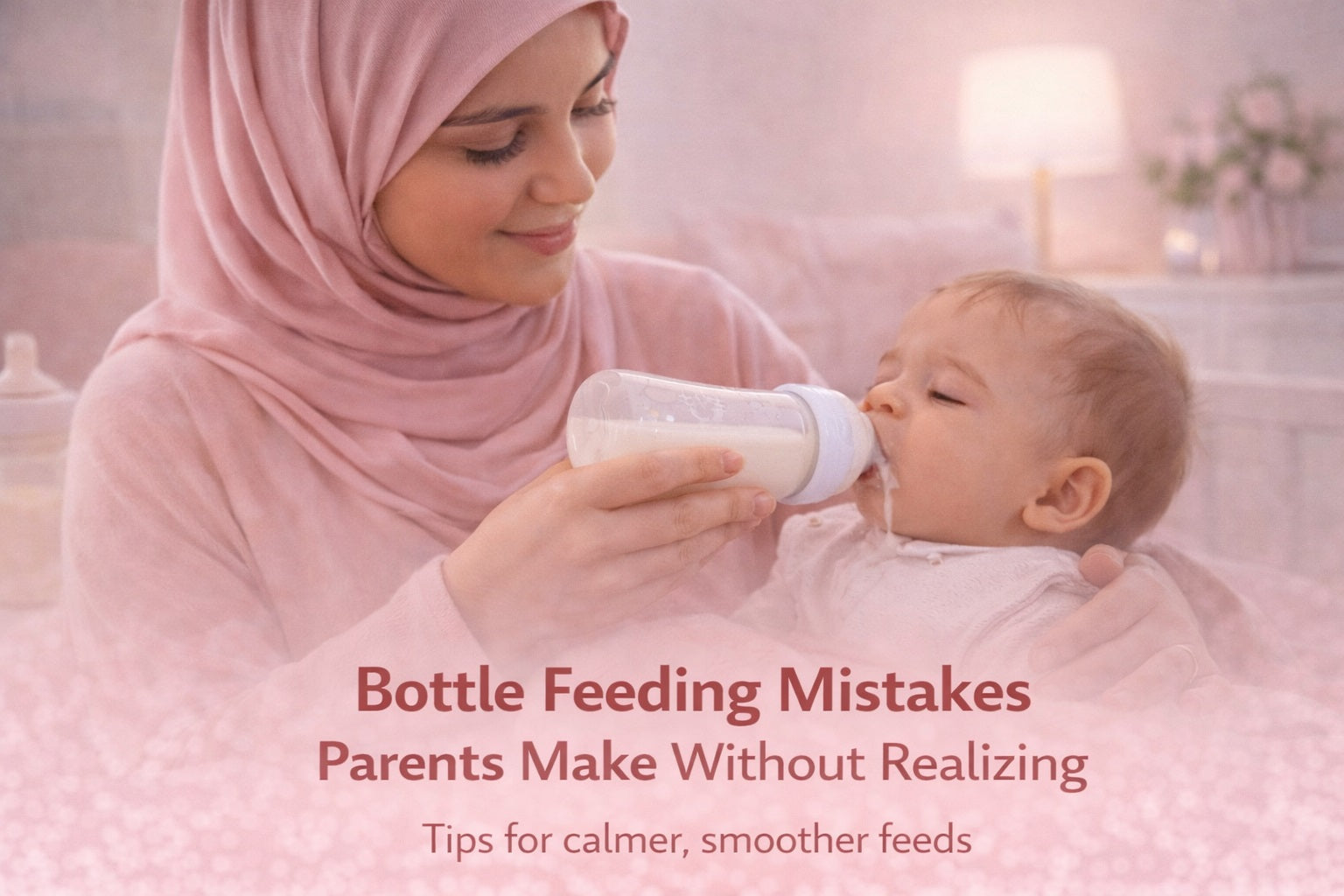
أخطاء الرضاعة بالزجاجة التي يرتكبها الآباء والأمهات دون أن يدركوا ذلك
لماذا تحدث مشكلات الرضاعة بالزجاجة أكثر مما يظن الآباء والأمهات؟
قد تبدو الرضاعة بالزجاجة بسيطة، لكن بعض العادات الصغيرة قد تؤثر على راحة الطفل أثناء الرضاعة. يتبع العديد من الآباء والأمهات روتينًا يبدو مفيدًا، لكنه قد يسبب بشكل غير ملحوظ بعض الإحباط أثناء التغذية مع مرور الوقت.
هذه الأخطاء شائعة، وغالبًا ما يكون من السهل تعديلها بمجرد ملاحظتها.
أخطاء شائعة في الرضاعة بالزجاجة يرتكبها الآباء والأمهات
الإسراع في الرضاعة
تسريع الرضاعة قد يسبب ضغطًا على الطفل ويجعل التجربة مرهقة. يحتاج الأطفال إلى وقت كافٍ للمص والتوقف والبلع بشكل مريح.
استخدام تدفق غير مناسب للحلمة
إذا كان تدفق الحليب سريعًا جدًا أو بطيئًا جدًا، فقد تصبح الرضاعة مزعجة. وقد يبدأ الطفل بالابتعاد أو اللعب بالحلمة أو رفض الزجاجة.
يمكنك استكشاف الخيارات المناسبة ضمن مجموعة زجاجات الرضاعة والحلمات.
تجاهل إشارات الجوع والشبع
الاعتماد فقط على الوقت بدلًا من إشارات الطفل قد يؤدي إلى الإفراط في الرضاعة أو رفضها. فالأطفال يُظهرون علامات واضحة على الجوع أو الشبع.
الرضاعة في بيئة مشتتة
الضوضاء والشاشات والحركة يمكن أن تقطع تركيز الطفل أثناء الرضاعة. وغالبًا ما يؤدي التشتت إلى رضعات أقصر أو شعور بالإحباط.
ويرتبط هذا بشكل وثيق بـ التشتت أثناء الرضاعة.
إجبار الطفل على إنهاء الزجاجة
تشجيع الطفل على إنهاء الحليب رغم ظهوره علامات الشبع قد يخلق ارتباطًا سلبيًا مع الرضاعة.
كيف تؤثر هذه الأخطاء على سلوك الرضاعة
قد تؤدي العادات البسيطة أثناء الرضاعة إلى مشكلات شائعة مثل رفض الزجاجة، أو اللعب أثناء الرضاعة، أو انخفاض كمية الحليب.
وقد تلاحظ أيضًا أنماطًا مشابهة في موضوع رفض الطفل المفاجئ للزجاجة أو اللعب بحلمة الرضاعة.
طرق بسيطة لتحسين الرضاعة بالزجاجة
تخفيف سرعة الرضاعة
السماح بفترات توقف أثناء الرضاعة يساعد الطفل على الشعور براحة أكبر وتحكم أفضل أثناء الشرب.
التحقق من وضعية الرضاعة
الوضعية الصحيحة تساعد على تحسين الراحة وتقليل التشتت.
ويجد العديد من الآباء والأمهات راحة إضافية باستخدام منتجات من مجموعة وسائد الرضاعة.
الحفاظ على بيئة رضاعة هادئة
تقليل الضوضاء والمثيرات يساعد الطفل على التركيز بشكل أفضل أثناء الرضاعة.
أخطاء شائعة يجب تجنبها مستقبلًا
- مقارنة كمية الرضاعة مع أطفال آخرين
- تغيير الزجاجات والحلمات بشكل متكرر
- التوتر أو الانفعال أثناء الرضاعة
الهدوء والاستمرارية يساعدان على بناء عادات رضاعة أفضل.
كيف يرتبط هذا بالصورة الأكبر لتغذية الطفل
تؤثر عادات الرضاعة بالزجاجة على روتين التغذية بشكل عام. وغالبًا ما تساعد التعديلات البسيطة في تقليل عدة مشكلات في الوقت نفسه.
للحصول على نظرة شاملة، يمكنك الرجوع إلى الدليل الأساسي حول مشكلات تغذية الأطفال.
الأسئلة الشائعة: أخطاء الرضاعة بالزجاجة
هل من السيئ أن لا يُكمل طفلي الزجاجة؟
لا. التوقف عند الشعور بالشبع يساعد الأطفال على تنظيم احتياجاتهم بشكل طبيعي.
كيف أعرف أن تدفق الحلمة غير مناسب؟
تشمل العلامات الاختناق، أو الابتعاد عن الزجاجة، أو الإحباط أثناء الرضاعة.
هل يمكن أن تسبب أخطاء الرضاعة رفض الزجاجة؟
نعم. الاستمرار في الشعور بعدم الراحة قد يؤدي إلى الرفض مع مرور الوقت.
هل الروتينات الغذائية مهمة فعلًا؟
نعم. الروتينات الثابتة تساعد على جعل الرضاعة أكثر هدوءًا ونجاحًا.