

أطعمة يجب تجنبها أثناء الحمل: دليل عملي للأمهات الحوامل
اكتشفي الأطعمة التي يتم تجنبها عادة أثناء الحمل، وأسباب أهميتها، ونصائح عملية لبناء نظام غذائي متوازن للحمل بثقة.
يُعد تناول نظام غذائي متوازن أحد الطرق العديدة التي يمكنك من خلالها دعم صحتك أثناء الحمل. إلى جانب اختيار الأطعمة المغذية، من المهم بنفس القدر معرفة الأطعمة التي يوصى عمومًا بتجنبها أو التعامل معها بحذر شديد. تسأل العديد من الأمهات الحوامل: "ما هي الأطعمة التي يجب تجنبها أثناء الحمل؟" بينما قد تبدو القائمة ساحقة في البداية، فإن فهم الأسباب الكامنة وراء هذه التوصيات يمكن أن يجعل التخطيط اليومي للوجبات أسهل بكثير.
تركز معظم إرشادات الغذاء أثناء الحمل على تقليل خطر الأمراض المنقولة بالغذاء وتجنب الأطعمة التي قد تحتوي على مستويات أعلى من بعض البكتيريا أو الطفيليات أو المواد التي لا يوصى بها أثناء الحمل. لحسن الحظ، هناك الكثير من البدائل الآمنة واللذيذة، حتى تتمكني من الاستمرار في الاستمتاع بنظام غذائي متنوع ومرضٍ.
في هذا الدليل، سنستكشف الأطعمة التي تُتجنب عادةً أثناء الحمل، ونشرح لماذا تُدرج في القائمة، ونشارك نصائح عملية لاتخاذ خيارات غذائية واثقة طوال فترة حملك.
لماذا سلامة الغذاء مهمة أثناء الحمل
أثناء الحمل، يتكيف جهازك المناعي بشكل طبيعي لدعم طفلك النامي. نتيجة لذلك، يوصى عمومًا بالرعاية الإضافية عند تحضير الطعام وسلامة الغذاء. يمكن أن يساعد اختيار الأطعمة المطبوخة جيدًا، وتخزين الوجبات بأمان، واتباع ممارسات النظافة الغذائية في تقليل خطر الأمراض المنقولة بالغذاء.
سلامة الغذاء لا تتعلق بتجنب كل وجبة مفضلة، بل تتعلق باتخاذ خيارات مستنيرة. غالبًا ما يكون فهم كيفية تحضير الأطعمة وتخزينها وتقديمها بنفس أهمية الأطعمة نفسها. سواء كنت تتناولين الطعام في المنزل أو تتناولين الطعام بالخارج، يمكن للعادات البسيطة مثل التحقق من درجات حرارة الطهي واختيار المطاعم ذات السمعة الطيبة أن تحدث فرقًا.
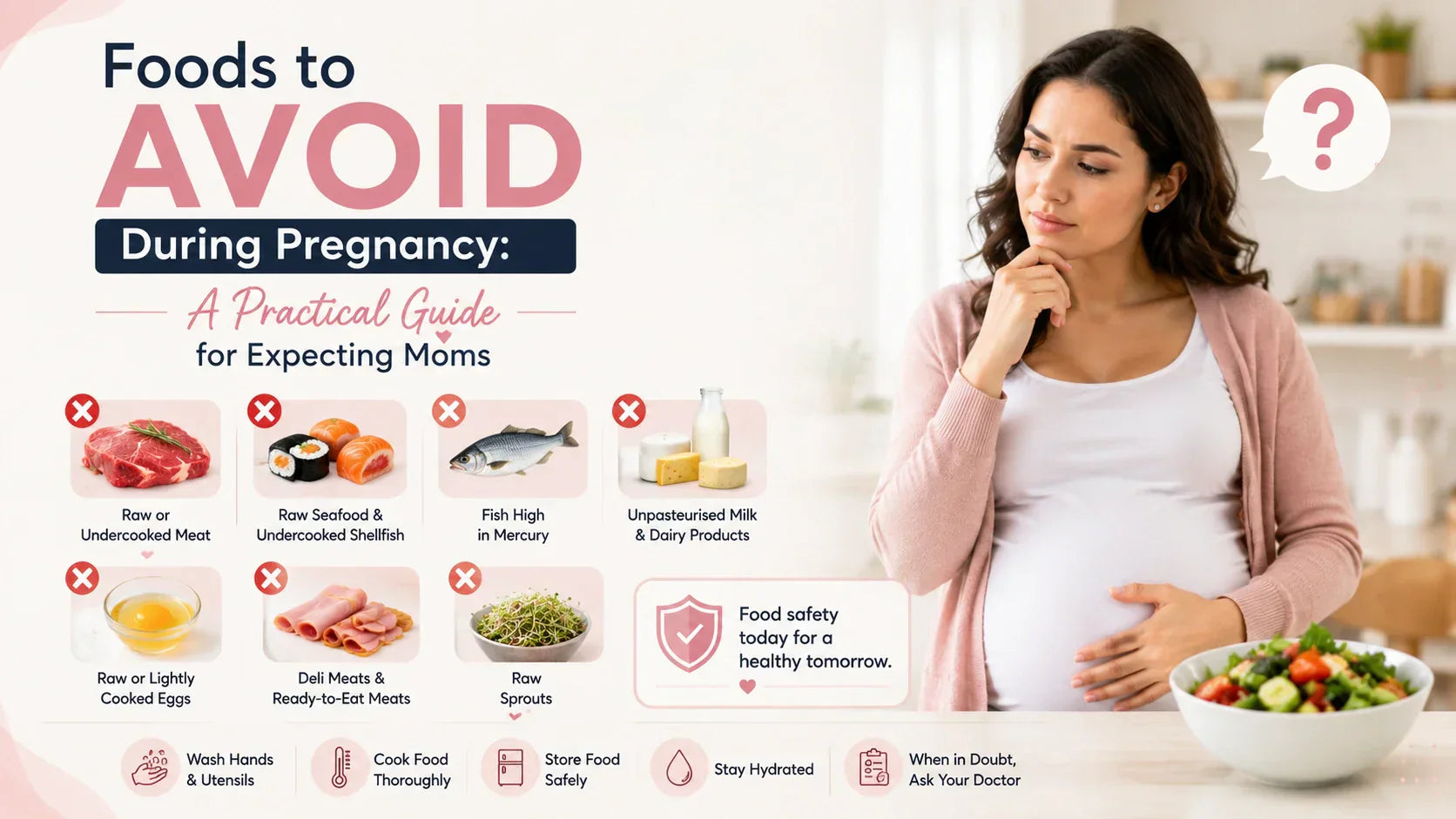
اللحوم النيئة أو غير المطهوة جيداً
تُتجنب اللحوم النيئة أو غير المطهوة جيداً بشكل عام أثناء الحمل لأنها قد تحتوي على بكتيريا ضارة أو طفيليات تُدمر بالطهي الشامل. يشمل هذا لحم البقر والضأن والدواجن واللحوم الأخرى التي تُقدم نصف مطهوة أو غير مطهوة بالكامل.
عند تحضير الوجبات في المنزل، استخدمي مقياس حرارة الطعام إذا لزم الأمر وتأكدي من طهي اللحم بالكامل قبل الأكل. إذا كنت تطلبين الطعام من مطعم، فلا تترددي في طلب طهي اللحم جيداً.
المأكولات البحرية النيئة والمحار غير المطبوخ جيداً
يُدرج السوشي المصنوع من السمك النيء، والمحار، والبلح، وبلح البحر، وغيرها من المأكولات البحرية النيئة أو غير المطهوة جيداً، عادةً ضمن قائمة الأطعمة التي يجب تجنبها أثناء الحمل. قد تحمل هذه الأطعمة بكتيريا، أو فيروسات، أو طفيليات يمكن أن تزيد من خطر الإصابة بالأمراض المنقولة بالغذاء.
إذا كنت تستمتعين بالمأكولات البحرية، فلا يزال هناك العديد من الخيارات المتاحة. يمكن غالبًا تضمين الأسماك والمأكولات البحرية المطهوة بالكامل والمُعدة وفقًا لتوصيات سلامة الغذاء كجزء من نظام غذائي متوازن للحمل. إذا كنت غير متأكدة من طبق معين، اسألي عن كيفية تحضيره قبل الطلب.
الأسماك الغنية بالزئبق
تُعد الأسماك مصدرًا ممتازًا للبروتين والعناصر الغذائية الهامة الأخرى، ولكن بعض الأنواع تحتوي بشكل طبيعي على مستويات أعلى من الزئبق مقارنة بالبعض الآخر. توصي السلطات الصحية عادةً بالحد من أو تجنب الأسماك المعروفة باحتوائها على مستويات عالية من الزئبق أثناء الحمل.
من الأمثلة الشائعة ما يلي:
- القرش
- سمك أبو سيف
- مكاريل الملك
- المارلين
- سمك البلاط (حسب المنطقة)
تظل العديد من الأسماك منخفضة الزئبق خيارات مناسبة أثناء الحمل عند تناولها وفقًا للإرشادات الغذائية المحلية. إذا كنت تتناولين المأكولات البحرية بانتظام، يمكن لمقدم الرعاية الصحية الخاص بك مساعدتك في فهم التوصيات التي تنطبق عليك.
الحليب ومنتجات الألبان غير المبسترة
الحليب والجبن والزبادي مصادر قيمة للكالسيوم والبروتين، ولكن من المهم التحقق مما إذا كانت منتجات الألبان قد صنعت من حليب مبستر. البسترة هي عملية تسخين تساعد على تقليل البكتيريا الضارة.
قد لا يوصى ببعض الأجبان الطرية ومنتجات الألبان المصنوعة من الحليب غير المبستر أثناء الحمل. يمكن أن تساعد قراءة ملصقات الطعام بعناية في تحديد المنتجات المصنوعة من الحليب المبستر. عند تناول الطعام خارج المنزل، لا تترددي في سؤال الموظفين إذا كنت غير متأكدة من المكونات.
البيض النيء أو شبه المطبوخ
قد تتطلب الأطعمة التي تحتوي على بيض نيء أو شبه مطبوخ اهتمامًا خاصًا أثناء الحمل، وذلك اعتمادًا على إرشادات سلامة الأغذية المحلية. أمثلة على ذلك المايونيز المصنوع في المنزل، بعض الحلويات، عجينة الكوكيز النيئة، والصلصات المحضرة ببيض غير مطبوخ، حيث قد يُنصح بالحذر.
يمكن أن يساعد اختيار الأطباق المحضرة ببيض مطبوخ جيدًا أو المنتجات التجارية المنتجة وفقًا لمعايير سلامة الأغذية المعترف بها في تقليل المخاطر المحتملة.
لحوم الدلي واللحوم الجاهزة للأكل
تُعد لحوم الدلي، وشرائح اللانشون، والنقانق، وغيرها من اللحوم الجاهزة للأكل فئة أخرى تُناقش غالبًا أثناء الحمل. توصي السلطات الصحية في العديد من البلدان بإعادة تسخين هذه الأطعمة حتى تصبح ساخنة جدًا قبل الأكل، حيث يمكن أن يساعد ذلك في تقليل مخاطر سلامة الغذاء.
إذا كنتِ تحضرين السندويشات في المنزل، فإن تسخين اللحم جيدًا قبل التقديم يمكن أن يكون طريقة بسيطة لاتباع توصيات سلامة الغذاء الحالية مع الاستمتاع بوجباتك المفضلة.
البراعم النيئة
تُزرع البراعم النيئة، بما في ذلك البرسيم، وفول المونج، والبرسيم الأحمر، وبراعم الفجل، في ظروف دافئة ورطبة حيث يمكن للبكتيريا أن تتكاثر أحيانًا. وبما أنها غالبًا ما تُؤكل نيئة، فهي تُدرج عادةً ضمن الأطعمة التي يجب تجنبها أثناء الحمل.
إذا كنت تستمتعين بالبراعم، فقد يكون اختيار الأنواع المطبوخة بدلاً من النيئة بديلاً أكثر أمانًا. يساعد الطهي في تقليل المخاطر المرتبطة بالبكتيريا التي قد تكون موجودة أثناء عملية النمو.
التحضير لحمل صحي
إن فهم الأطعمة التي يجب تجنبها هو جزء واحد فقط من التحضير للحمل. يمكن أن يساعد بناء وجبات متوازنة، والبقاء رطبًا، واتباع توصيات سلامة الغذاء على الشعور بثقة أكبر في خياراتك اليومية. كل حمل مختلف، لذا إذا كانت لديك أسئلة حول نظامك الغذائي أو احتياجاتك الغذائية، فمن الأفضل دائمًا التحدث مع مقدم الرعاية الصحية الخاص بك.
في ماما آب، ندعم الآباء في كل مرحلة من مراحل رحلتهم. استكشفي مجموعتنا من أساسيات رعاية الأمومة، ومنتجات دعم الحمل، ومستلزمات حديثي الولادة لمساعدتك على الاستعداد للأشهر القادمة.
الكافيين أثناء الحمل
يمكن أن تساهم القهوة والشاي ومشروبات الطاقة والمشروبات الغازية وحتى الشوكولاتة في كمية الكافيين اليومية التي تتناولينها. بينما يمكن للعديد من النساء الحوامل الاستمتاع بالكافيين، توصي معظم السلطات الصحية بالبقاء ضمن الحد اليومي الذي يوصي به مقدم الرعاية الصحية الخاص بك أو الإرشادات المحلية للحمل. نظرًا لوجود الكافيين في مجموعة متنوعة من الأطعمة والمشروبات، فمن المفيد مراعاة إجمالي الكمية التي تتناولينها على مدار اليوم بدلاً من التركيز على مشروب واحد.
إذا كنتِ تشربين القهوة بانتظام، فلا داعي للتوقف تمامًا ما لم يُنصح بخلاف ذلك من قبل مقدم الرعاية الصحية الخاص بك. بدلاً من ذلك، قد تجدين أنه من المفيد تقليل أحجام الحصص أو التبديل إلى بدائل تحتوي على نسبة أقل من الكافيين. يجب أيضًا اختيار شاي الأعشاب بعناية، حيث لا يُنصح بجميع مكونات الأعشاب أثناء الحمل.
الكحول أثناء الحمل
لا يُنصح بالكحول عمومًا أثناء الحمل. إذا كنتِ حاملاً أو تعتقدين أنكِ قد تكونين حاملاً، فمن الأفضل التحدث مع مقدم الرعاية الصحية الخاص بك إذا كانت لديكِ أسئلة حول استهلاك الكحول أو كنتِ بحاجة إلى نصيحة شخصية. عند تناول الطعام في الخارج أو حضور التجمعات الاجتماعية، تقدم العديد من المطاعم الآن مجموعة واسعة من المشروبات الخالية من الكحول التي يمكن أن تكون بدائل ممتعة.
إذا كنتِ غير متأكدة أبدًا مما إذا كان المشروب يحتوي على كحول، فتحققي من الملصق أو اسألي قبل الطلب. اختيار الخيارات غير الكحولية يجعل من السهل الاستمتاع بالمناسبات الخاصة مع اتباع إرشادات الحمل الحالية.
الفواكه والخضروات غير المغسولة
تُعد الفواكه والخضروات الطازجة جزءًا مهمًا من نظام غذائي صحي للحمل، ولكن يجب غسلها جيدًا دائمًا قبل الأكل. يساعد غسل المنتجات تحت الماء الجاري النظيف على إزالة الأوساخ وقد يقلل من البكتيريا التي قد تكون موجودة على السطح.
تنطبق هذه التوصية سواء كنتِ تشترين المنتجات من سوبر ماركت أو سوق محلي أو تحضرين السلطات في المنزل. حتى الفواكه ذات القشور، مثل الشمام أو الأفوكادو، يجب غسلها قبل التقطيع، حيث يمكن أن تنتقل البكتيريا الموجودة على السطح الخارجي إلى الداخل أثناء التحضير.
الأطعمة المصنعة بشدة والسكريات
عادةً لا يلزم التخلص تمامًا من الوجبات الخفيفة المعالجة بشدة والحلويات السكرية والوجبات السريعة، ولكن من الأفضل الاستمتاع بها باعتدال كجزء من نظام غذائي متوازن. يمكن أن يساعد بناء الوجبات حول الخضروات والفواكه والحبوب الكاملة والبروتينات الخالية من الدهون ومنتجات الألبان أو البدائل المناسبة والدهون الصحية في تلبية احتياجاتك الغذائية مع ترك مساحة للحلويات العرضية.
بدلاً من التركيز على التقييد، تجد العديد من الأمهات الحوامل أنه من الأسهل التفكير في إضافة الأطعمة المغذية إلى وجباتهن. يمكن للتغييرات الصغيرة، مثل اختيار خبز الحبوب الكاملة أو إضافة المزيد من الخضروات أو استبدال المشروبات السكرية بالماء، أن تجعل عادات الأكل اليومية أسهل في الحفاظ عليها.
نصائح لتناول الطعام بالخارج أثناء الحمل
لا يزال تناول الطعام في المطاعم ممكنًا أثناء الحمل، خاصةً عندما تتخذين خيارات مستنيرة. اختيار المطاعم ذات السمعة الطيبة، وطلب وجبات محضرة طازجة، وطلب طهي اللحوم والمأكولات البحرية والبيض جيدًا يمكن أن يساعد في تقليل المخاوف المتعلقة بسلامة الغذاء.
إذا كنت غير متأكدة مما إذا كان الطبق يحتوي على مكونات نيئة أو منتجات ألبان غير مبسترة، فلا تترددي في السؤال. يسعد معظم المطاعم بشرح كيفية تحضير وجباتهم. يمكن أن يساعد التخطيط المسبق في الاستمتاع بتناول الطعام بالخارج مع الشعور بالثقة في خياراتك الغذائية.
بدائل صحية للقيود الغذائية الشائعة أثناء الحمل
معرفة الأطعمة التي يجب الحد منها لا يعني أن وجباتك يجب أن تصبح مملة. فالعديد من الأطعمة الشعبية لها بدائل بسيطة تتناسب بسهولة مع نظام غذائي متوازن للحمل.
| إذا كنتِ تختارين عادةً... | فكرِي في تجربة... |
|---|---|
| السوشي النيء | لفائف السوشي المطبوخة أو لفائف الخضروات |
| الجبن الطري المصنوع من حليب غير مبستر | أنواع الجبن المبستر |
| شريحة لحم غير ناضجة (Rare steak) | لحم البقر قليل الدهن المطبوخ بالكامل |
| عجينة الكوكيز النيئة | الكوكيز المخبوزة طازجًا |
| مشروبات الطاقة الغنية بالكافيين | الماء أو الحليب أو خيارات تحتوي على كمية أقل من الكافيين |
تسمح لكِ هذه البدائل البسيطة بالاستمرار في الاستمتاع بنظام غذائي متنوع مع اتباع توصيات سلامة الغذاء المعترف بها أثناء الحمل.
الأسئلة الشائعة
ما هي الأطعمة التي يجب تجنبها أثناء الحمل؟
تشمل الأطعمة التي تُتجنب عادةً أثناء الحمل اللحوم النيئة أو غير المطبوخة جيدًا، والمأكولات البحرية النيئة، والأسماك الغنية بالزئبق، ومنتجات الألبان غير المبسترة، والبيض النيء، والبراعم النيئة، والكحول. قد تختلف توصيات سلامة الغذاء، لذا من الأفضل دائمًا اتباع إرشادات مقدم الرعاية الصحية والسلطات الصحية المحلية.
هل يمكنني تناول المأكولات البحرية أثناء الحمل؟
لا يزال من الممكن الاستمتاع بالعديد من أنواع المأكولات البحرية أثناء الحمل عند طهيها جيدًا واختيارها وفقًا للإرشادات الغذائية المعترف بها. عادةً ما تُحدد أو تُتجنب بعض الأسماك التي تحتوي على مستويات عالية من الزئبق، بينما يُوصى غالبًا بالخيارات ذات الزئبق الأقل.
هل يُسمح بالقهوة أثناء الحمل؟
تستمر العديد من النساء الحوامل في شرب القهوة باعتدال. نظرًا لتنوع توصيات الكافيين، من المهم اتباع الإرشادات المقدمة من مقدم الرعاية الصحية الخاص بك أو السلطات الصحية المحلية فيما يتعلق بالكمية اليومية.
هل يمكنني تناول الجبن أثناء الحمل؟
نعم، تُدرج العديد من أنواع الجبن المصنوعة من الحليب المبستر عادة في نظام غذائي للحمل. تحققي دائمًا من ملصقات الطعام أو اسألي عند تناول الطعام خارج المنزل إذا كنتِ غير متأكدة مما إذا كان الجبن قد بُستر.
هل تناول الطعام بالخارج آمن أثناء الحمل؟
نعم. يمكن أن يساعد اختيار المطاعم ذات السمعة الطيبة، وطلب وجبات مطبوخة جيدًا، والسؤال عن المكونات في اتخاذ خيارات غذائية مستنيرة عند تناول الطعام خارج المنزل.
أين يمكنني العثور على مستلزمات الحمل في قطر؟
يمكنك التسوق لمنتجات رعاية الأمومة، ومستلزمات دعم الحمل، ومستلزمات الرضاعة الطبيعية، ومنتجات الأطفال عبر الإنترنت على MamaApp.co. مجموعتنا المختارة بعناية مصممة لدعم العائلات من الحمل حتى الأبوة المبكرة.
الخلاصة
إن فهم الأطعمة التي يجب تجنبها أثناء الحمل لا يعني التخلي عن الوجبات الممتعة. فمعظم التوصيات تركز على سلامة الغذاء، والتحضير المناسب، واتخاذ خيارات مستنيرة بدلاً من اتباع أنظمة غذائية مقيدة بشكل مفرط. من خلال اختيار الأطعمة الطازجة، واتباع ممارسات النظافة المعترف بها، والحفاظ على نظام غذائي متنوع، يمكنك الشعور بثقة أكبر بشأن وجباتك اليومية.
الحمل هو أيضًا وقت رائع للاستعداد للأشهر القادمة. فإلى جانب عادات الأكل الصحية، يمكن أن يساعد توفر منتجات الأمومة المناسبة ومستلزمات حديثي الولادة في تسهيل الانتقال إلى الأبوة. في ماما آب، ستجدين مجموعة مختارة بعناية من منتجات رعاية الأمومة، ومستلزمات الرضاعة الطبيعية، وإكسسوارات التغذية، ومستلزمات الأطفال الضرورية من علامات تجارية موثوقة.
قد تجدين هذه الأدلة مفيدة أيضًا: