


كيفية تجشئة حديثي الولادة بشكل صحيح: وضعيات مجربة وفعالة
يساعد التجشؤ في إطلاق الهواء المبتلع الذي يمكن أن يجعل الأطفال غير مرتاحين أثناء الرضاعة أو بعدها. تعرّفي على أفضل أوضاع التجشؤ، ومتى يجب تجشؤ طفلك، وماذا تفعلين إذا لم يتجشأ.

قد يبدو التجشؤ جزءًا صغيرًا من عملية الرضاعة، ولكنه قد يحدث فرقًا كبيرًا في راحة طفلك. أثناء الرضاعة الطبيعية أو الرضاعة بالزجاجة، يبتلع الأطفال بشكل طبيعي كميات صغيرة من الهواء مع الحليب. إذا حُبس هذا الهواء في المعدة، فقد يؤدي ذلك إلى شعور بعدم الراحة، أو الانزعاج، أو الانتفاخ، أو بصق الحليب بعد الرضاعة.
الخبر السار هو أن التجشؤ لا يجب أن يكون معقدًا. غالبًا ما يكون استخدام الوضع الصحيح، ودعم رأس ورقبة طفلك بشكل صحيح، ومنحهم بضع دقائق لإطلاق الهواء المحبوس هو كل ما يلزم.
في هذا الدليل، سنشرح كيفية تجشؤ حديثي الولادة بشكل صحيح، وأكثر أوضاع التجشؤ فعالية، ومتى يجب تجشؤ طفلك، وماذا تفعل إذا لم يتجشأ طفلك ببساطة.
لماذا يحتاج الأطفال حديثو الولادة إلى التجشؤ؟
عندما يرضع الأطفال، غالبًا ما يبتلعون الهواء، خاصة إذا كانوا يرضعون بسرعة، أو لديهم رد فعل مص قوي، أو يستخدمون زجاجة ذات حلمة سريعة التدفق. يمكن أن يشغل هذا الهواء المحبوس مساحة في المعدة، مما يجعل الأطفال يشعرون بالشبع قبل أن يحصلوا على ما يكفي من الحليب أو يسبب لهم الانزعاج بمجرد انتهاء الرضاعة.
يساعد التجشؤ في إطلاق هذا الهواء المحبوس، مما يسمح لطفلك بالشعور براحة أكبر وأحيانًا يقلل من بصق الحليب بعد الرضاعة.
متى يجب أن تقوم بتجشؤ طفلك؟
يختلف كل طفل عن الآخر، ولكن هذه هي الأوقات الشائعة لمحاولة التجشؤ:
- في منتصف الرضاعة بالزجاجة.
- بعد الانتهاء من كل رضعة.
- عند التبديل بين الثديين أثناء الرضاعة الطبيعية.
- إذا أصبح طفلك منزعجًا فجأة أو ابتعد عن الرضاعة.
نادرًا ما يحتاج بعض الأطفال إلى التجشؤ، بينما يستفيد البعض الآخر من فترات راحة متكررة أثناء الرضاعة.
كم من الوقت يجب أن تحاول؟
لا داعي لقضاء وقت طويل في محاولة تجشؤ طفلك. إذا لم يحدث تجشؤ بعد دقيقة إلى دقيقتين وبدا طفلك مرتاحًا، فمن المعقول الاستمرار في الرضاعة أو ببساطة إبقاء طفلك في وضع مستقيم لفترة قصيرة.
لا تنتهي كل رضعة بتجشؤ، وهذا أمر طبيعي تمامًا.
أفضل أوضاع التجشؤ التي تعمل بالفعل
١. وضعية فوق الكتف
هذه إحدى التقنيات الأكثر شيوعًا وفعالية.
- احملي طفلك في وضع مستقيم على كتفك.
- ادعمي رأسه ورقبته بإحكام.
- ضعي قطعة قماش للتجشؤ فوق كتفك لالتقاط أي بصق.
- افركي أو ربتي بلطف على ظهر طفلك باستخدام حركات بطيئة وثابتة.
الوضع المستقيم يشجع بشكل طبيعي الهواء المحبوس على الصعود.
٢. الجلوس في حضنج
يستجيب بعض الأطفال بشكل أفضل لهذا الوضع.
- أجلسي طفلك في وضع مستقيم على حجرك.
- ادعمي ذقنه وصدره بيد واحدة (تجنبي الضغط على الحلق).
- أميليه قليلاً إلى الأمام.
- افركي أو ربتي بلطف على منتصف ظهره.
غالبًا ما يكون هذا الوضع فعالًا للأطفال الذين لا يتجشؤون بسهولة فوق الكتف.
٣. على بطنه فوق حضنج
ضعي طفلك على بطنه عبر حجرك مع إبقاء رأسه أعلى قليلاً من صدره.
ادعمي الرأس والرقبة في جميع الأوقات، ثم افركي أو ربتي بلطف على الظهر. قد يساعد الضغط اللطيف على البطن في تحريك الهواء المحبوس إلى الأعلى.
التربيت مقابل الفرك: أيهما أفضل؟
يمكن أن تكون كلتا التقنيتين فعالة.
- التربيت اللطيف يخلق اهتزازات صغيرة قد تساعد في تحريك الهواء المحبوس.
- الفرك الدائري البطيء غالبًا ما يكون أكثر تهدئة للأطفال الذين لا يحبون التربيت.
يجمع العديد من الآباء بشكل طبيعي بين الطريقتين حتى يتجشأ طفلهم.
نصائح للرضاعة بالزجاجة قد تقلل من الهواء المبتلع
إذا كنت ترضعين بالزجاجة، فإن تقليل كمية الهواء المبتلعة أثناء الرضاعة قد يقلل من الحاجة إلى التجشؤ المتكرر.
- امسكي الزجاجة بزاوية بحيث تبقى الحلمة مملوءة بالحليب.
- اختاري تدفق الحلمة الصحيح لعمر طفلك.
- استخدمي زجاجات الأطفال عالية الجودة المصممة لتقليل امتصاص الهواء.
- توقفي أثناء الرضعات الطويلة لتجشؤ طفلك.
إذا لم تكوني متأكدة مما إذا كانت الزجاجة الحالية مناسبة، فإن دليلنا حول كيفية اختيار أفضل زجاجة رضاعة للأطفال في قطر يشرح الميزات التي يجب على الآباء مراعاتها.
نصائح للرضاعة الطبيعية لتقليل الهواء المبتلع
يبتلع الأطفال الذين يرضعون طبيعيًا أيضًا الهواء، على الرغم من أن بعضهم قد يبتلع كمية أقل من الأطفال الذين يرضعون بالزجاجة إذا كان لديهم رضاعة عميقة.
للمساعدة في تقليل الهواء المبتلع:
- تأكدي من أن طفلك يرضع بعمق وراحة.
- أرضعي في بيئة هادئة مع الحد الأدنى من المشتتات.
- اسمح لطفلك بالرضاعة بالسرعة التي تناسبه.
- قومي بالتجشؤ عند التبديل بين الثديين إذا لزم الأمر.
إذا كنت تعملين على تحسين الرضاعة الطبيعية، فإن دليلنا حول نصائح للرضاعة الطبيعية والشفط الناجحين يشارك نصائح عملية للأمهات الجدد.
ماذا لو لم يتجشأ طفلي؟
من الطبيعي تمامًا ألا يتجشأ طفلك بعد كل رضعة. بعض الأطفال يبتلعون كمية أقل من الهواء بشكل طبيعي.
إذا بدا طفلك مسترخيًا، ويرضع جيدًا، ولا يظهر عليه علامات عدم الراحة، فمن الجيد عادة التوقف عن المحاولة بعد دقيقة أو دقيقتين. قد يساعد إبقاء طفلك في وضع مستقيم لمدة 15 إلى 20 دقيقة بعد الرضاعة في تقليل بصق الحليب.
علامات قد تدل على أن طفلك يعاني من الغازات المحبوسة
على الرغم من أن كل طفل منزعج لا يعاني من الغازات المحبوسة، إلا أن هذه العلامات قد تشير إلى أن الهواء المبتلع يسبب عدم الراحة:
- البكاء بعد الرضاعة بوقت قصير.
- سحب الساقين نحو البطن.
- تقوس الظهر.
- معدة صلبة أو منتفخة.
- كثرة التململ بعد الرضاعة.
إذا كان طفلك يبكي بانتظام بعد الرضاعة، فإن مقالنا حول لماذا يبكي طفلي بعد كل رضعة؟ يشرح الأسباب الشائعة الأخرى بخلاف الغازات المحبوسة.
هل يمكن أن يساعد التجشؤ في منع بصق الحليب؟
قد يقلل التجشؤ من كمية الهواء المبتلعة في المعدة، مما قد يساعد بعض الأطفال على بصق كمية أقل من الحليب. ومع ذلك، فإنه لن يمنع كل حالات بصق الحليب لأن بصق الحليب غالبًا ما يرتبط بالتطور الطبيعي للجهاز الهضمي للطفل.
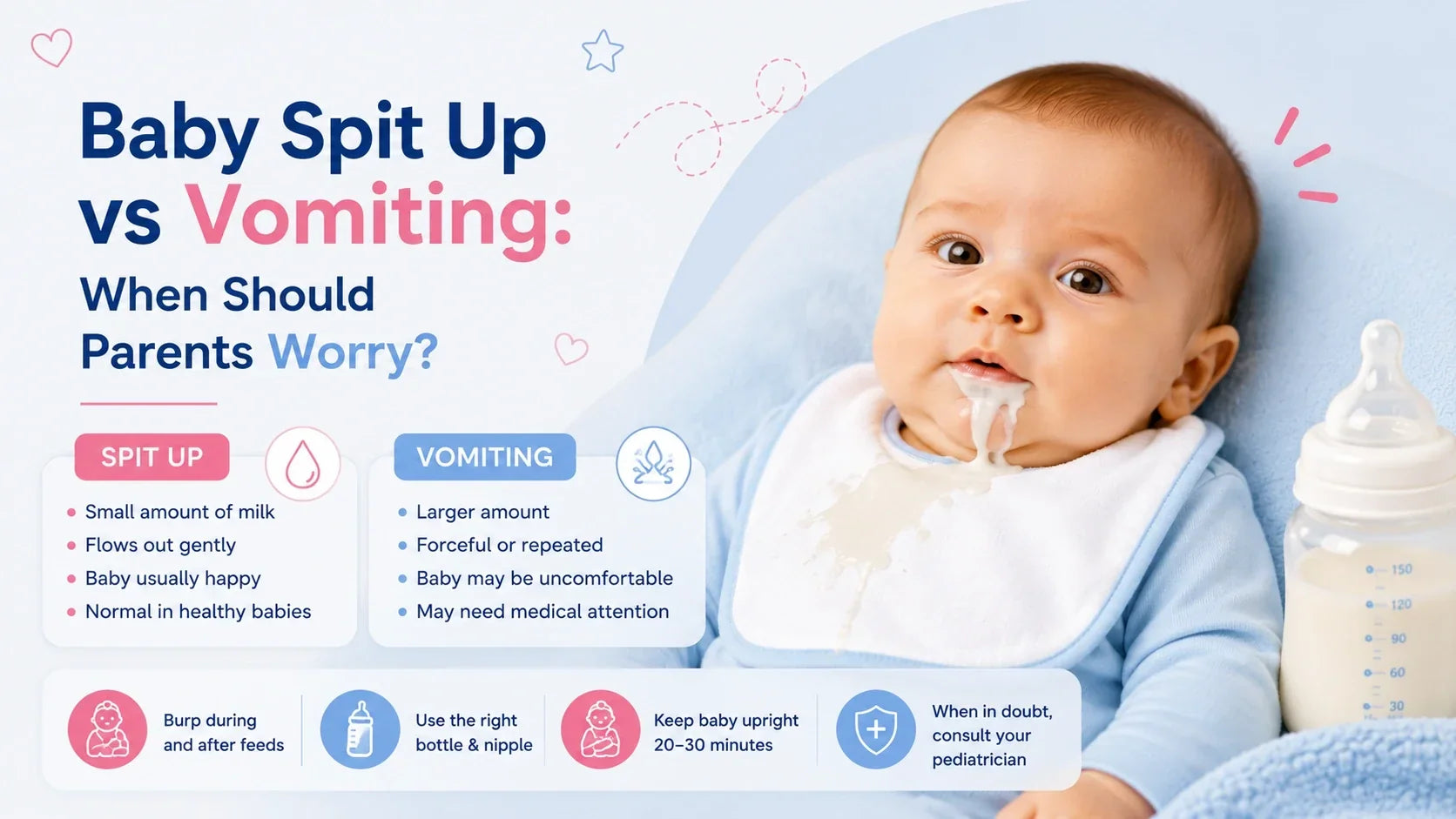
إذا كان طفلك يبصق الحليب بشكل متكرر، فقد تجدين دليلنا حول بصق الحليب مقابل القيء عند الأطفال: متى يجب أن يقلق الآباء؟ مفيدًا لفهم ما هو طبيعي ومتى يجب طلب المشورة الطبية.
أخطاء التجشؤ الشائعة
- التربيت بقوة شديدة بدلاً من استخدام حركات لطيفة وثابتة.
- عدم دعم رأس ورقبة طفلك.
- محاولة التجشؤ لفترة طويلة جدًا عندما يبدو طفلك مرتاحًا.
- وضع طفلك مستلقيًا فورًا بعد الرضاعة.
- تخطي فترات التجشؤ أثناء الرضعات الطويلة بالزجاجة.
متى يجب التحدث مع طبيب الأطفال الخاص بك؟
الغازات العرضية وصعوبة التجشؤ شائعة خلال فترة الرضاعة. ومع ذلك، اطلبي المشورة الطبية إذا كان طفلك:
- يعاني من قيء قذفي متكرر.
- يرفض الرضاعة بانتظام.
- لا يكتسب الوزن بشكل جيد.
- يبكي بشكل مفرط بعد كل رضعة تقريبًا على الرغم من تجربة تقنيات التجشؤ المختلفة.
- يعاني من قيء دموي أو أخضر اللون.
- يبدو نعسانًا بشكل غير عادي أو يصعب إيقاظه.
يمكن لطبيب الأطفال تحديد ما إذا كان الارتجاع، أو مشكلة في الرضاعة، أو حالة طبية أخرى قد تساهم في أعراض طفلك.
الأسئلة المتكررة
كم من الوقت يجب أن أجشأ طفلي حديث الولادة؟
يوصي معظم أخصائيي الرعاية الصحية بالمحاولة لمدة دقيقة إلى دقيقتين. إذا لم يتجشأ طفلك ولكنه يبدو مرتاحًا، فمن الجيد عادة التوقف وإبقائه في وضع مستقيم لفترة قصيرة.
هل يحتاج جميع الأطفال حديثي الولادة إلى التجشؤ بعد كل رضعة؟
لا. بعض الأطفال يبتلعون كمية قليلة جدًا من الهواء بشكل طبيعي وقد لا يتجشؤون بعد كل رضعة. إذا كان طفلك مرتاحًا ويرضع جيدًا، فهذا أمر طبيعي بشكل عام.
ما هو أفضل وضع للتجشؤ؟
وضع فوق الكتف هو الأكثر استخدامًا، ولكن بعض الأطفال يتجشؤون بسهولة أكبر أثناء الجلوس في وضع مستقيم على حجر الوالد أو الاستلقاء على البطن عبر الحجر. قد تحتاجين إلى تجربة أوضاع مختلفة للعثور على ما يناسب طفلك.
هل يمكن أن يساعد التجشؤ في تقليل بصق الحليب؟
قد يساعد التجشؤ في إطلاق الهواء المبتلع، مما قد يقلل الضغط في المعدة ويقلل من بصق الحليب لدى بعض الأطفال. ومع ذلك، فإن بصق الحليب العرضي لا يزال جزءًا طبيعيًا من فترة الرضاعة.
ماذا لو نام طفلي قبل التجشؤ؟
إذا نام طفلك وبدا مرتاحًا، فلا داعي عادة لإيقاظه لمجرد التجشؤ. قد يكون إبقائه في وضع مستقيم لعدة دقائق قبل وضعه مفيدًا.