

مشكلات تغذية الأطفال: دليل شامل للآباء والأمهات في قطر

تُعد مخاوف التغذية من أكثر الأمور التي تقلق الآباء والأمهات الجدد. فقد يشرب الطفل كمية أقل من الحليب، أو يتشتت أثناء الرضاعة، أو يرفض زجاجة الرضاعة، أو يغيّر عاداته الغذائية بشكل مفاجئ. وقد تبدو هذه المواقف مرهقة، خاصة عندما لا تكون متأكدًا مما إذا كان هناك شيء غير طبيعي.
في معظم الحالات، تكون مشكلات التغذية جزءًا من النمو والتطور الطبيعي للطفل. ومع اتباع الأسلوب الصحيح، والتحلي بالصبر، واستخدام أدوات التغذية المناسبة، فإن العديد من هذه المشكلات تتحسن بشكل طبيعي.
كيفية التعامل بهدوء مع مشكلات تغذية الأطفال الشائعة
قد تختلف تحديات التغذية من مرحلة إلى أخرى. فبعضها مؤقت، بينما يحتاج بعضها الآخر إلى تعديلات بسيطة في المنزل.
يلعب الطفل أثناء الرضاعة بدلًا من تناول الحليب
يمسك العديد من الأطفال بحلمة الرضاعة أو يمضغونها أو يلعبون بها بدلًا من الشرب. ويحدث هذا غالبًا مع زيادة الفضول أو بدء مرحلة التسنين. ولا يعني ذلك دائمًا وجود مشكلة في الرضاعة.
يمكنك قراءة المزيد عن هذا السلوك في دليلنا المفصل حول مشكلات تغذية الأطفال الشائعة.
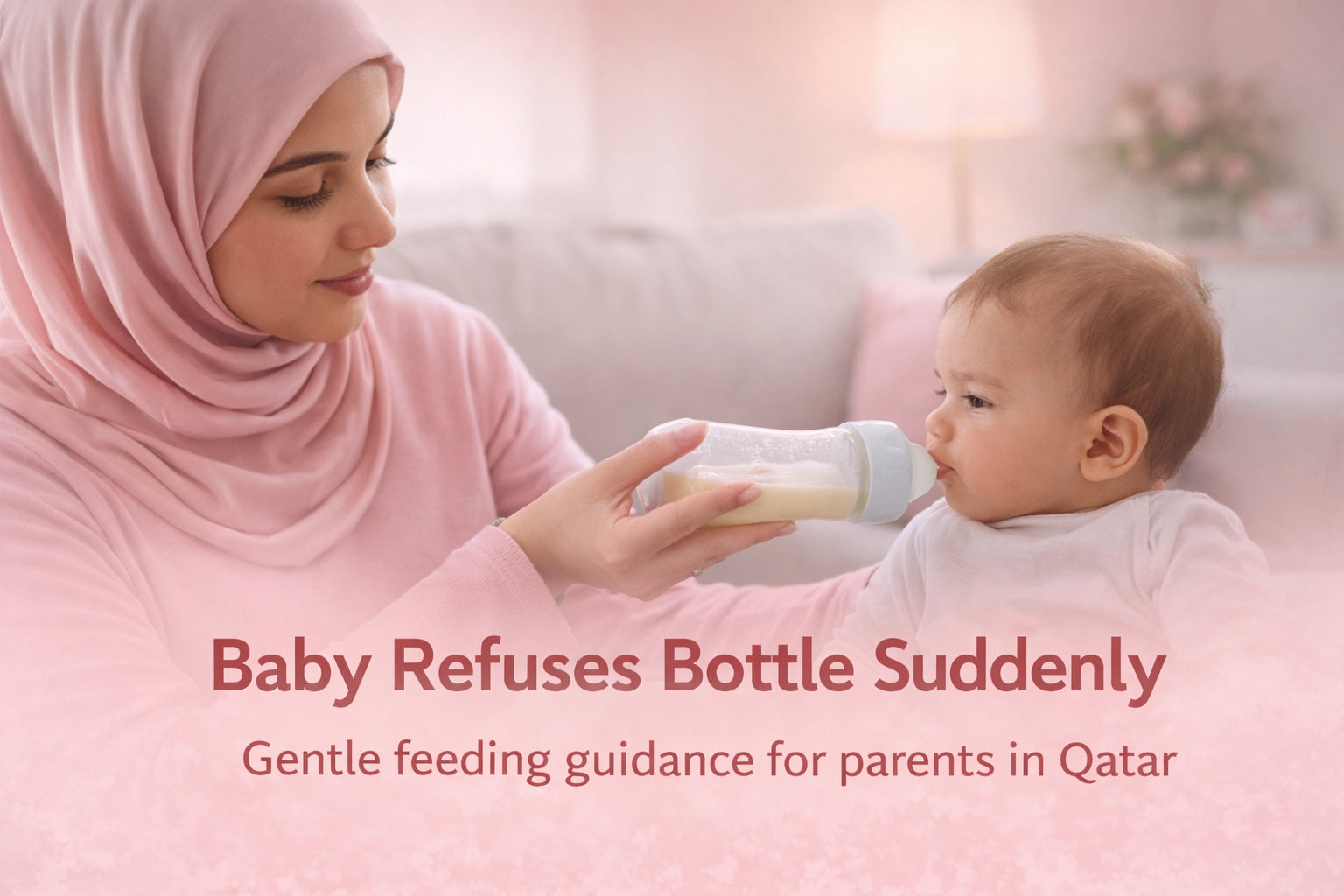
يرفض الطفل زجاجة الرضاعة بشكل مفاجئ
قد يرفض الطفل الذي كان يرضع جيدًا زجاجة الرضاعة فجأة. ويمكن أن يحدث ذلك خلال فترات النمو السريع، أو عند تغير الروتين اليومي، أو مع زيادة وعي الطفل بما يدور حوله.
عادةً ما تكون الاستجابة الهادئة والالتزام بالروتين أكثر فائدة من إجبار الطفل على الرضاعة.
يشرب الطفل كمية أقل من الحليب لكنه يبدو مرتاحًا
قد تتغير الشهية مع نمو الأطفال. ولا تعني الرضعات الأقصر أو الكميات الأقل دائمًا وجود مشكلة، خاصة إذا ظل الطفل نشيطًا ومرتاحًا.
يتشتت الطفل أثناء الرضاعة
مع ازدياد انتباه الأطفال لما حولهم، تصبح الأصوات والحركة والأشخاص المحيطون بهم عوامل منافسة للرضاعة. وغالبًا ما تساعد بيئة الرضاعة الهادئة على تحسين التركيز.
لماذا تكون مشكلات التغذية مؤقتة في الغالب؟
تتطور مهارات التغذية بمرور الوقت. ومع نمو الأطفال، تتغير احتياجاتهم وسلوكياتهم. فما كان مناسبًا في شهر معين قد لا يكون بنفس الفعالية في الشهر التالي.
وترتبط هذه التغيرات عادةً بالتطور الطبيعي أكثر من ارتباطها بوجود مشكلة حقيقية في التغذية.
كيف تساعد روتينات التغذية على تحسين الرضاعة؟
يساعد الروتين الأطفال على الشعور بالأمان. فالرضاعة في أوقات متقاربة، وفي المكان نفسه، وباستخدام الأدوات المألوفة قد تقلل من مقاومة الطفل للرضاعة.
وغالبًا ما تُحدث التعديلات البسيطة فرقًا كبيرًا.
مكان ثابت للرضاعة
يشجع المكان الهادئ والمألوف الطفل على التركيز. كما أن تقليل الضوضاء والحركة يساعد الأطفال على البقاء مندمجين أثناء الرضاعة.
وضعية مريحة للرضاعة
يساهم الدعم المناسب في زيادة راحة الطفل أثناء الرضاعة. ويجد العديد من الآباء والأمهات أن الوضعية المستقيمة والدعم الثابت يقللان من عوامل التشتت.
يمكن العثور على خيارات داعمة ضمن مجموعة وسائد الرضاعة.
اختيار أدوات التغذية المناسبة
يساعد استخدام أدوات التغذية المناسبة لعمر الطفل على توفير تجربة رضاعة أكثر سلاسة.
زجاجات الرضاعة والحلمات
تلعب سرعة تدفق الحلمة وشكل الزجاجة دورًا مهمًا. ومع نمو الأطفال، تتغير قوة الرضاعة والوتيرة المناسبة لهم.
يمكنك استكشاف الخيارات المناسبة ضمن مجموعات زجاجات الرضاعة والحلمات.
إكسسوارات التغذية
تساعد الإكسسوارات مثل الأكواب والأوعية والمرايل في دعم الطفل مع تطور مهارات التغذية لديه.
تصفح المنتجات المفيدة ضمن إكسسوارات التغذية.
متى يشير سلوك التغذية إلى الاستعداد للتغيير؟
تُعد بعض مشكلات التغذية علامات على التقدم والتطور. فاللعب بزجاجة الرضاعة أو إظهار الاهتمام بالأكواب قد يشير إلى استعداد الطفل لتجربة طرق تغذية جديدة.
ويسمح تقديم الأدوات الجديدة تدريجيًا للأطفال بالاستكشاف دون ضغط.
ما الذي يجب تجنبه عند مواجهة مشكلات التغذية؟
- إجبار الطفل على الرضاعة عندما يُظهر مقاومة
- إطالة مدة الرضاعة للتعويض
- تغيير عدة أدوات تغذية في الوقت نفسه
الاستمرارية اللطيفة أكثر فعالية من الاستعجال.
تحديات التغذية في الحياة اليومية في قطر
قد تؤثر الجداول اليومية المزدحمة، والزيارات العائلية، والخروج من المنزل، وارتفاع درجات الحرارة على روتين الرضاعة. وتجد العديد من العائلات أن الرضعات داخل المنزل خلال الأوقات الأكثر هدوءًا من اليوم تكون أكثر نجاحًا.
إن الجمع بين المرونة والروتين يساعد على تحقيق توازن أفضل في التغذية.
متى تكون هناك حاجة إلى متابعة أدق؟
إذا كانت مشكلات التغذية مصحوبة بضعف زيادة الوزن، أو انزعاج شديد، أو رفض مستمر للرضاعة عبر العديد من الوجبات، فمن المهم مراقبة الأنماط بشكل أدق.
يمكن أن يساعد تدوين أوقات الرضاعة والكميات المتناولة في ملاحظة أي تغيرات.
الأسئلة الشائعة حول مشكلات تغذية الأطفال
هل مشكلات التغذية طبيعية عند الأطفال؟
نعم. العديد من تحديات التغذية تُعد جزءًا من التطور الطبيعي وغالبًا ما تتحسن مع مرور الوقت.
هل يجب أن أقلق إذا تخطى طفلي إحدى الرضعات؟
تخطي بعض الرضعات بشكل عرضي أمر شائع. أما الرفض المستمر للرضاعة أو ضعف النمو فقد يتطلبان متابعة أدق.
هل يمكن أن تساعد روتينات التغذية في تقليل المشكلات؟
نعم. تساعد الروتينات المنتظمة الأطفال على الشعور بالأمان والتركيز أثناء الرضاعة.
هل تؤثر أدوات التغذية على سلوك الطفل أثناء الرضاعة؟
نعم. تساعد زجاجات الرضاعة والحلمات والإكسسوارات المناسبة لعمر الطفل على توفير تجربة رضاعة أكثر سلاسة.