

يرفض الطفل زجاجة الرضاعة فجأة: ماذا يمكن للآباء والأمهات في قطر أن يفعلوا؟
لماذا قد يرفض الطفل زجاجة الرضاعة فجأة؟
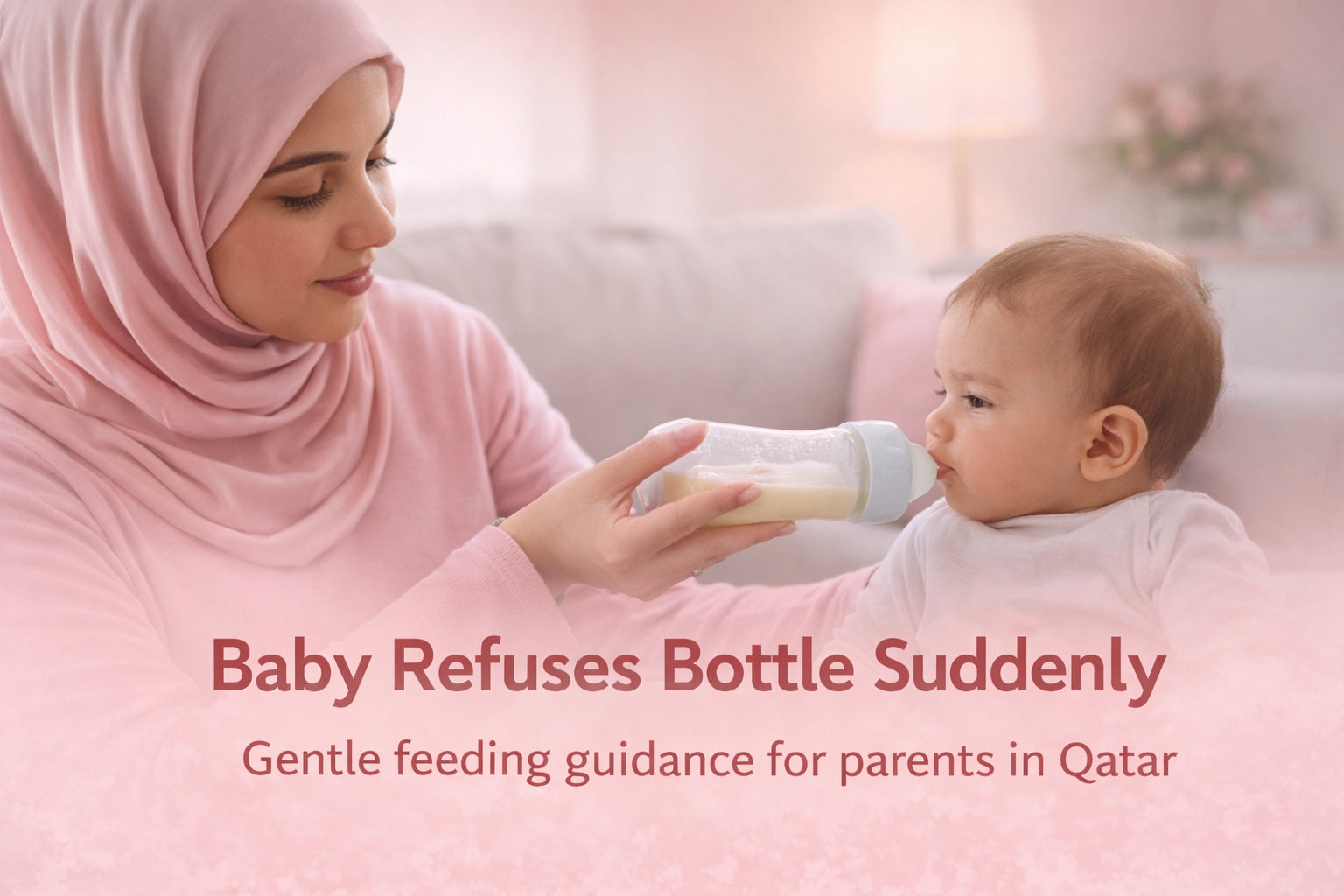
قد يكون رفض الطفل لزجاجة الرضاعة بعد أن كان يرضع منها بشكل جيد أمرًا مقلقًا. وغالبًا ما يحدث هذا التغيير دون سابق إنذار، مما يترك الآباء والأمهات في حيرة من أمرهم حول سبب حدوثه. وفي كثير من الحالات، يكون هذا الرفض مؤقتًا ومرتبطًا بالنمو الطبيعي للطفل.
إن فهم الأسباب المحتملة يمكن أن يساعدك على التعامل مع الموقف بهدوء وتجنب تحويل الرضاعة إلى صراع.
التغيرات التطورية
مع نمو الأطفال، يزداد وعيهم بما حولهم. وقد تصبح الرضاعة منافسة للمشاهد والأصوات والحركات الجديدة. فيلاحظ الطفل الزجاجة، لكن اهتمامه يتجه إلى أمور أخرى.
التغيرات في الروتين أو البيئة
قد تؤثر السفر، أو وجود الزوار، أو مقدمو الرعاية الجدد، أو التغييرات في الجدول اليومي على راحة الطفل أثناء الرضاعة. وحتى التغييرات البسيطة في الروتين قد تؤدي إلى رفض مؤقت للرضاعة.
الانزعاج الناتج عن التسنين
قد تجعل آلام اللثة عملية المص غير مريحة للطفل. لذلك قد تتوقف الرضاعة مؤقتًا بينما يبحث الطفل عن الراحة.
التغيرات في تدفق الحليب أو تفضيل نوع الحلمة
إذا كان تدفق الحليب سريعًا جدًا أو بطيئًا جدًا، فقد يشعر الطفل بالإحباط. كما قد يطور الأطفال تفضيلات معينة لأشكال الحلمات المختلفة مع نموهم.
هل رفض زجاجة الرضاعة المفاجئ أمر طبيعي؟
نعم. يُعد الرفض المفاجئ أمرًا شائعًا وغالبًا ما يختفي من تلقاء نفسه. ويعود العديد من الأطفال إلى الرضاعة الطبيعية بمجرد زوال السبب.
عادةً ما يكون القلق مبررًا فقط إذا استمر الرفض عبر العديد من الرضعات أو تباطأت زيادة الوزن.
كيف يمكن للآباء والأمهات التعامل بلطف؟
تساعد الاستجابة الهادئة في الحفاظ على علاقة إيجابية مع الرضاعة. وغالبًا ما يؤدي الضغط إلى زيادة الرفض.
الحفاظ على أوقات الرضاعة مريحة
إن تقديم الزجاجة دون إجبار يمنح الطفل فرصة لاستعادة شعوره بالراحة. وقد تكون الاستراحة القصيرة مفيدة إذا أظهر مقاومة.
مراجعة الزجاجة والحلمة المستخدمة
قد يساعد استخدام حلمات مناسبة لعمر الطفل على تحسين راحته أثناء تدفق الحليب.
يمكنك استكشاف الخيارات المناسبة ضمن مجموعة زجاجات الرضاعة والحلمات.
دعم وضعية رضاعة مريحة
يمكن أن يساعد الدعم المناسب على تقليل الإجهاد والتشتت أثناء الرضاعة.
ويجد العديد من الآباء والأمهات مزيدًا من الراحة عند استخدام منتجات من مجموعة وسائد الرضاعة.
متى قد يشير الرفض إلى الاستعداد للتغيير؟
يرفض بعض الأطفال زجاجة الرضاعة لأن مهارات التغذية لديهم تتطور. وقد يبدأ الطفل بإظهار اهتمام بالإمساك بالأكواب أو استكشاف أدوات تغذية جديدة.
يمكن تقديم هذه الخيارات بلطف باستخدام منتجات من قسم إكسسوارات التغذية.
أخطاء شائعة يجب تجنبها
- إجبار الطفل على أخذ الزجاجة عندما يُبدي مقاومة
- إطالة جلسات الرضاعة للتعويض
- إظهار الانزعاج أو الإحباط أثناء الرضاعة
يجب أن تشعر كل من الرضيع والوالدين بالراحة والطمأنينة أثناء الرضاعة.
روتينات الرضاعة المفيدة في المنازل القطرية
قد تؤثر الجداول اليومية المزدحمة، والخروج من المنزل، وارتفاع درجات الحرارة على تركيز الطفل أثناء الرضاعة. وتجد العديد من العائلات أن الرضعات الهادئة داخل المنزل تكون أكثر نجاحًا، خاصة خلال الأوقات الأكثر اعتدالًا من اليوم.
الاستمرارية تبني الثقة مع مرور الوقت.
الأسئلة الشائعة: رفض الطفل زجاجة الرضاعة فجأة
لماذا توقف طفلي فجأة عن أخذ زجاجة الرضاعة؟
تُعد التغيرات التطورية، وتبدل الروتين، والانزعاج الناتج عن التسنين من الأسباب الشائعة.
هل يجب أن أجبر طفلي على شرب الحليب؟
لا. فإجبار الطفل على الرضاعة غالبًا ما يزيد من مقاومته وتوتره.
كم تستمر عادةً فترة رفض زجاجة الرضاعة؟
بالنسبة للعديد من الأطفال، تستمر هذه المرحلة بضعة أيام أو أسابيع قبل أن تتحسن.
متى يجب أن أشعر بالقلق؟
إذا استمر الرفض عبر العديد من الرضعات أو تباطأ النمو، فهناك حاجة إلى متابعة أدق.