

طفلك يلعب بحلمة الزجاجة بدلاً من الأكل؟ إليكِ ما يحدث حقاً
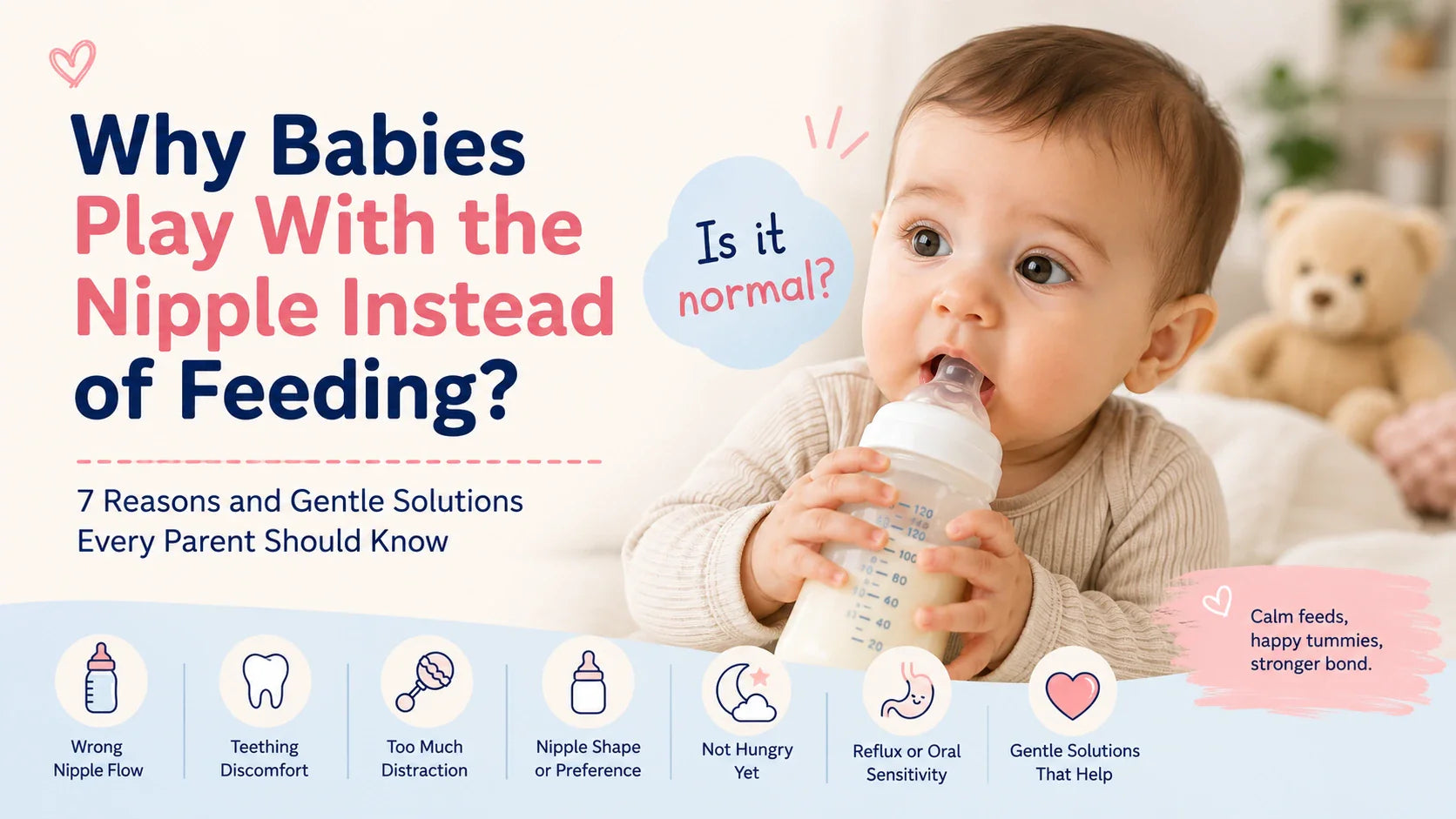
تجلسين لإطعام طفلكِ، وهو أمرٌ يفترض أن يكون بسيطًا. الرضّاعة دافئة، الحليب جاهز، ويشبك طفلكِ عليها لثانيتين، ثم يسحبها ليمضغ أو يعضّ أو يحدّق في الحلمة وكأنها لعبة جديدة. بعد عشر دقائق، بالكاد اختفت أونصة واحدة وتتساءلين عما إذا كان هناك خطأ ما. إذا كان هذا يبدو مألوفًا، خذي نفسًا. إنها إحدى أكثر الشكاوى شيوعًا التي يثيرها الآباء حول الرضاعة، وفي معظم الحالات يكون لها سبب واضح وقابل للإصلاح.
عادةً ما يعود لعب الأطفال بحلمة الرضّاعة بدلاً من الأكل الفعلي إلى أحد أسباب قليلة: فهم ليسوا جائعين بعد، أو أن تدفق الحلمة لا يتناسب مع احتياجاتهم، أو أنهم في طور التسنين، أو أنهم ببساطة في مرحلة يكون فيها العالم أكثر إثارة للاهتمام من وقت الوجبات. دعنا نستعرض كل واحدة حتى تتمكني من معرفة ما يحدث لطفلكِ على وجه التحديد.
لماذا يلعب الأطفال بالحلمة بدلاً من الرضاعة؟
الرضاعة ليست مجرد استجابة للجوع عند الأطفال. إنها أيضًا تجربة حسية تتضمن ردود فعل المص، واستكشاف الفم، والبحث عن الراحة. في حوالي 4 إلى 6 أشهر، يبدأ العديد من الأطفال في التعامل مع حلمة الرضّاعة كشيء يستكشفونه بدلاً من مجرد الشرب منه، خاصةً مع بدء التسنين وتوق لثتهم للضغط. هذا تطور طبيعي، وليس اضطرابًا في الرضاعة، على الرغم من أن بعض التعديلات العملية عادة ما تحله بسرعة.
7 أسباب شائعة للعب طفلكِ بدلاً من الأكل
1. هم ليسوا جائعين حقًا
إذا كانت فترات الرضاعة متقاربة، أو كان طفلكِ قد تناول رضعة كبيرة للتو، فإن شهيته لم تتكون بعد. الأطفال جيدون بشكل مدهش في تنظيم تناولهم للطعام، لذا فإن الرضاعة البطيئة أو المرحة قد تعني ببساطة أنهم ليسوا جائعين جدًا في الوقت الحالي. حاولي تأخير الرضاعة 20 إلى 30 دقيقة ولاحظي ما إذا كان هناك فرق.
2. معدل تدفق الحلمة خاطئ
هذا أحد الأسباب الأكثر إغفالًا. إذا كان التدفق بطيئًا جدًا، يصاب الأطفال بالإحباط ويبدأون في مضغ الحلمة لمحاولة إخراج المزيد من الحليب. إذا كان التدفق سريعًا جدًا، يأتي الحليب بسرعة كبيرة ويسحبون أنفسهم ويلعبون به لإبطاء الأمور. تتغير احتياجات تدفق الحلمة مع نمو الأطفال، لذا فإن ما كان يعمل في عمر شهرين قد لا يعمل في عمر خمسة أشهر. غالبًا ما يكون التحقق من حجم الحلمة ومرحلة التدفق مقارنة بعمر طفلكِ الحالي هو أسرع حل.
3. عدم راحة التسنين
تسبب اللثة المؤلمة والمتورمة عدم راحة عند المص، لذا يعض الأطفال الحلمة ويمضغونها للتخفيف بدلاً من الرضاعة بنشاط. إذا لاحظتِ سيلان اللعاب، أو مضغ القبضات، أو التهيج إلى جانب اللعب بالرضّاعة، فمن المرجح أن يكون التسنين هو السبب. يمكن أن يؤدي إعطاء عضّاضة مبردة قبل 15 إلى 20 دقيقة من الرضاعة إلى تخفيف الانزعاج بما يكفي لتركيز طفلكِ على الأكل.
4. تشتيت الانتباه النمائي
في حوالي 4 إلى 8 أشهر، يصبح الأطفال أكثر وعيًا بمحيطهم. الأصوات، الوجوه، الأضواء، وحتى أيديهم يمكن أن تسحب انتباههم في منتصف الرضاعة. هذه علامة على أن دماغهم يتطور بشكل طبيعي، وليست مشكلة في الرضاعة. غالبًا ما يؤدي إطعامهم في مكان هادئ، خافت الإضاءة، قليل المحفزات إلى استعادة تركيزهم.
5. تفضيل شكل أو مادة الحلمة
يفضل بعض الأطفال ببساطة شكل حلمة أو ملمسًا أو مادة مختلفة عن التي أعطيت لهم. يمكن أن يؤدي التبديل بين السيليكون واللاتكس، أو بين التصميمات ذات العنق العريض والتصاميم القياسية، إلى إحداث فرق حقيقي لطفل يبدو غير مهتم بالرضّاعة التي يستخدمها حاليًا. يستحق الأمر تجربة نمط مختلف من الرضّاعة قبل افتراض أنها مشكلة سلوكية.
6. الإفراط في التحفيز قبل أو أثناء الرضاعة
قد يكون الطفل الذي كان يلعب للتو، أو يتم تداوله، أو تعرض للكثير من الضوضاء قبل الرضاعة مباشرة، لا يزال متوترًا جدًا للاستقرار على الأكل. يمكن أن يساعد تخصيص فترة قصيرة للتهدئة، وأضواء خافتة، وصوت هادئ، وهز لطيف، قبل تقديم الرضّاعة، في انتقالهم إلى وضع الرضاعة.
7. الارتجاع أو الحساسية الفموية
أحيانًا، يرتبط اللعب بالحلمة بدلاً من الشرب بعدم الراحة من الارتجاع، أو بحساسية فموية تجعل المص المستمر متعبًا أو غير سار. هذا أقل شيوعًا من الأسباب المذكورة أعلاه، ولكن إذا اقترن بتقوّس الظهر، أو البكاء أثناء الرضاعة، أو ضعف زيادة الوزن، فمن المفيد ذكره لطبيب الأطفال بدلاً من التعديل بنفسك.
طرق لطيفة لإعادة الرضاعة إلى مسارها الصحيح
- قومي بالرضاعة في مكان هادئ، قليل الإلهاء، بعيدًا عن الشاشات، الإخوة والأخوات، أو الضوء الساطع.
- قومي بمطابقة معدل تدفق الحلمة مع عمر طفلكِ الحالي ووتيرة الرضاعة، وليس فقط ملصق العلبة.
- جربي الرضاعة بالزجاجة بوتيرة بطيئة، مع إمساك الزجاجة بشكل أفقي أكثر والتوقف بين الحين والآخر، حتى يظل طفلكِ مشاركًا نشطًا بدلاً من أن يشعر بالإرهاق.
- قدمي عضّاضة قبل الرضاعة بوقت قصير إذا كنتِ تشكين في التهاب اللثة.
- حافظي على فترات رضاعة متباعدة بشكل مناسب حتى يتسنى للجوع أن يتراكم.
- ابقي مسترخية أثناء الرضاعة. يدرك الأطفال التوتر، وغالبًا ما يجعل جلسة الرضاعة المجهدة اللعب أسوأ وليس أفضل.
متى يجب استشارة طبيب الأطفال؟
اللعب بالرضّاعة في بعض الأحيان أمر طبيعي ونادرًا ما يدعو للقلق. يجدر مناقشة الأمر مع طبيب الأطفال إذا لاحظتِ أن طفلكِ يتناول باستمرار كمية حليب أقل من اللازم، أو يفقد وزنه أو لا يزداد وزنه كما هو متوقع، أو يختنق، أو يتجشأ، أو يسعل أثناء الرضاعة، أو يرفض الرضاعة بشكل مستمر لأكثر من بضعة أيام. هذه العلامات قد تشير إلى شيء أبعد من مجرد تشتيت انتباه طبيعي وتستدعي فحصًا مناسبًا.
الأسئلة المتكررة
هل من الطبيعي أن يمضغ الطفل حلمة الرضاعة بدلاً من الشرب؟
نعم، خاصة بين 4 و 8 أشهر. غالبًا ما يرتبط بالتسنين، أو عدم تطابق معدل التدفق، أو مرحلة نمو يكون فيها الأطفال أكثر فضولاً بشأن محيطهم وأفواههم.
ما هو تدفق الحلمة الذي يجب أن أستخدمه إذا استمر طفلي في اللعب بها؟
ابدئي بالتحقق من مرحلة التدفق مقارنة بعمر طفلكِ. إذا كان يمضغ ويبدو محبطًا، فقد يكون التدفق بطيئًا جدًا. إذا كان يبتلع، ويسحب نفسه، ثم يلعب، فقد يكون سريعًا جدًا. تعد تجربة مرحلة أعلى أو أقل خطوة أولى معقولة.
هل يمكن أن يكون التسنين سببًا في عدم رضاعة طفلي بشكل صحيح؟
يمكن أن يكون كذلك. تجعل اللثة الملتهبة المص النشط غير مريح، لذا غالبًا ما يمضغ الأطفال الحلمة لتخفيف الألم بدلاً من الرضاعة بشكل طبيعي. يمكن أن يساعد تقديم عضّاضة باردة قبل الرضاعة.
متى يجب أن أقلق بشأن عدم تناول طفلي جيدًا من الرضاعة؟
إذا اقترن ذلك بفقدان الوزن، أو عدم زيادة الوزن بشكل كافٍ، أو الاختناق، أو الرفض المستمر لأكثر من بضعة أيام، أو ضيق مرئي أثناء الرضاعة، فقد حان الوقت للتحدث مع طبيب الأطفال بدلاً من الانتظار.