



بصق الرضيع وقيئه: متى يجب على الوالدين القلق؟
هل يتقيأ طفلك بعد كل رضعة، أم أنه يتقيأ؟ تعرّفي على كيفية التمييز بينهما، وما هو الطبيعي، ومتى تحتاجين إلى رعاية طبية.
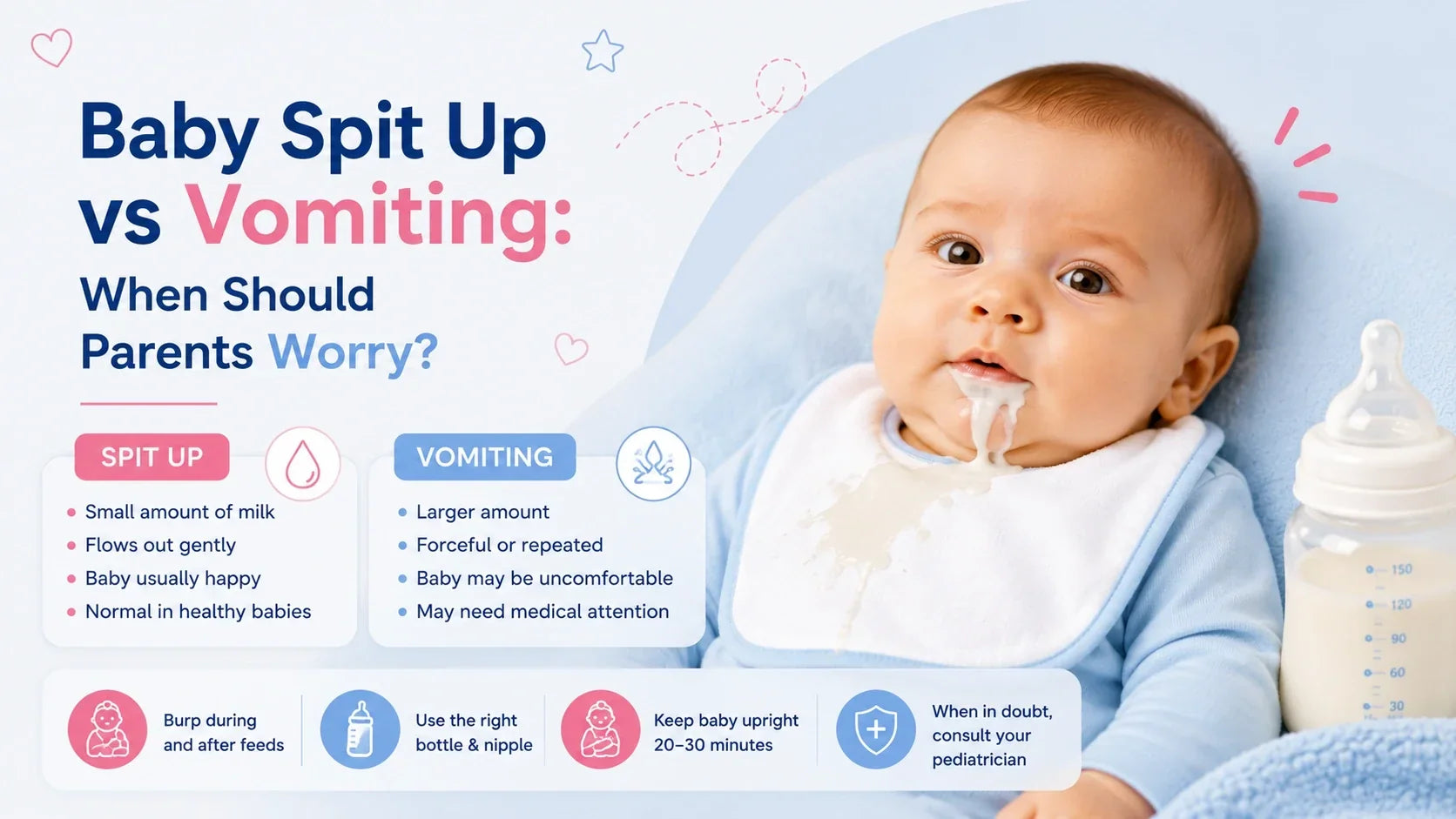
يختبر كل أب وأم جديد هذه اللحظة: لقد انتهيت للتو من إرضاع طفلك، وتخرج كمية صغيرة من الحليب على ملابسه أو ملابسك. غالبًا ما يكون تفكيرك الأول، "هل هذا طبيعي، أم أن طفلي يتقيأ؟"
الخبر السار هو أن القشط العرضي شائع جدًا خلال فترة الرضاعة. في الواقع، يتقيأ العديد من الأطفال الأصحاء عدة مرات في اليوم لأن جهازهم الهضمي لا يزال في طور النمو. ومع ذلك، يختلف القيء. بينما يمكن أن يكون سببه أحيانًا مرض بسيط في المعدة، قد يتطلب القيء المتكرر أو القوي رعاية طبية.
يمكن أن تساعدك معرفة الفرق بين القشط والقيء على الاستجابة بشكل مناسب والشعور بثقة أكبر أثناء الرضاعة.
ما هو قشط الطفل؟
القشط هو تدفق غير مجهد لكمية صغيرة من الحليب من فم طفلك بعد الرضاعة مباشرة. يحدث عادة دون شعور بالضيق أو البكاء وغالبًا ما يكون مرتبطًا بصمام غير ناضج بين المعدة والمريء.
نظرًا لأن هذا الصمام لا يزال في طور النمو خلال السنة الأولى من العمر، يمكن لكميات صغيرة من الحليب أن تتدفق بسهولة بعد الرضاعة، خاصة عندما يتجشأ الأطفال أو يغيرون وضعيتهم أو تكون معدتهم ممتلئة.
يعتبر القشط جزءًا طبيعيًا من فترة الرضاعة للعديد من الأطفال وعادة ما يتحسن عندما يبدأون في الجلوس وتناول الأطعمة الصلبة.
ما هو القيء؟
يختلف القيء لأنه يتضمن انقباضًا أقوى وأكثر قوة لعضلات المعدة. بدلاً من تدفق الحليب بلطف، يتم طرد القيء عادة بقوة ملحوظة وقد يحدث بشكل متكرر.
اعتمادًا على السبب، قد يكون القيء مصحوبًا بالحمى، والإسهال، وسوء التغذية، والنعاس غير المعتاد، أو علامات تدل على أن طفلك مريض.
قشط الطفل مقابل القيء: ما الفرق؟
| القشط | القيء |
|---|---|
| كمية صغيرة من الحليب | كمية أكبر من محتويات المعدة |
| يتدفق بلطف | عادة ما يكون قويًا أو متكررًا |
| يبقى الطفل سعيدًا عادة | قد يبكي الطفل أو يبدو غير مرتاح |
| غالبًا ما يحدث بعد الرضاعة | يمكن أن يحدث في أي وقت |
| طبيعي عند الرضع الأصحاء | قد يتطلب تقييمًا طبيًا حسب الأعراض |
الأسباب الشائعة لقشط الطفل
١. الجهاز الهضمي غير الناضج
العضلة التي تحتفظ بالحليب داخل المعدة لا تزال في طور النمو خلال الأشهر القليلة الأولى من العمر. بسبب هذا، يمكن للحليب أن يتدفق بسهولة إلى المريء بعد الرضاعة.
٢. ابتلاع الهوا أثناء الرضاعة
قد يتقيأ الأطفال الذين يبتلعون هواءً إضافيًا أثناء الرضاعة بشكل متكرر. يمكن أن يساعد استخدام زجاجة حليب ذات حجم مناسب مع تدفق حلمة صحيح والتجشؤ بانتظام أثناء الرضاعة في تقليل الهواء المبتلع.
٣. الرضاعة الزايدة
إذا أصبحت معدة طفلك ممتلئة جدًا، فقد تعود كمية صغيرة من الحليب بشكل طبيعي. يمكن أن يساعد تقديم الرضعات بناءً على علامات جوع طفلك بدلاً من تشجيعه على إنهاء كل زجاجة.
٤. الحركة بعد الرضاعة
تغيير الحفاضات فورًا بعد الرضاعة، أو القفز، أو اللعب النشط قد يزيد من احتمالية القشط لأن الضغط يوضع على المعدة.
الأسباب الشائعة للقيء
قد يكون للقيء عدة أسباب محتملة، بما في ذلك:
- التهابات المعدة الفيروسية.
- عدم تحمل الطعام أو الحساسية.
- مرض الارتجاع المعدي المريئي (GERD).
- أخطاء في تحضير الحليب الصناعي.
- أقل شيوعًا، حالة طبية كامنة تتطلب تقييمًا فوريًا.
إذا بدا طفلك غالبًا غير مرتاح أثناء أو بعد الرضاعة، فإن دليلنا حول مشاكل تغذية الرضع يشرح العديد من مشاكل التغذية التي قد تساهم في عدم الراحة الهضمي.
متى يكون القشط طبيعيًا؟
يعتبر القشط طبيعيًا بشكل عام عندما يكون طفلك:
- يستمر في الرضاعة جيدًا.
- يكتسب وزنًا مناسبًا.
- يبدو سعيدًا قبل وبعد الرضاعة.
- يخرج كمية صغيرة فقط من الحليب.
- لا يظهر أي علامات مرض.
يتوقف العديد من الأطفال عن القشط المتكرر بين 6 و 12 شهرًا مع نضوج جهازهم الهضمي.
متى يجب أن يقلق الآباء بشأن القيء؟
على الرغم من أن القيء العرضي يمكن أن يحدث، إلا أن بعض الأعراض يجب عدم تجاهلها أبدًا. اتصل بطبيب الأطفال فورًا إذا كان طفلك:
- يتقيأ بقوة ودفعة واحدة بشكل متكرر.
- يتقيأ سائلًا أخضر (صفراء) أو ملطخًا بالدم.
- يعاني من حمى مع قيء متكرر.
- يظهر علامات الجفاف، مثل عدد أقل من الحفاضات المبللة، أو جفاف الفم، أو النعاس غير المعتاد.
- يرفض عدة رضعات متتالية.
- يعاني من قيء مستمر يستمر لأكثر من 24 ساعة.
- لا يكتسب وزنًا أو بدأ يفقد الوزن.
- يعاني من انتفاخ أو ألم في البطن.
إذا أصيب طفلك بالحمى إلى جانب القيء، فإن استخدام ميزان حرارة الطفل الموثوق به يمكن أن يساعدك في مراقبة درجة حرارته قبل الاتصال بمقدم الرعاية الصحية.
هل يمكن أن يكون ارتجاعًا؟
يعاني العديد من الأطفال من الارتجاع المعدي المريئي (GER)، حيث تتدفق كميات صغيرة من الحليب إلى المريء بعد الرضاعة. الارتجاع المعدي المريئي شائع جدًا خلال فترة الرضاعة وعادة ما يتحسن بشكل طبيعي مع نمو الأطفال.
على عكس القشط الطبيعي، قد يسبب مرض الارتجاع المعدي المريئي (GERD) صعوبات في الرضاعة، وضعف زيادة الوزن، وعدم الراحة المتكرر، أو البكاء المستمر. إذا بدا طفلك منزعجًا أثناء أو بعد الرضاعة، يمكن لطبيب الأطفال تحديد ما إذا كانت هناك حاجة إلى مزيد من التقييم.
إذا كانت الرضاعة تتبعها بانتظام نوبات بكاء أو عدم راحة، فقد تساعدك مقالتنا حول لماذا يبكي طفلي بعد كل رضعة؟ على فهم الأسباب المحتملة الأخرى.
كيفية تقليل القشط بعد الرضاعة
بينما قد لا تتمكن من التخلص من القشط تمامًا، يمكن أن تساعد عادات الرضاعة البسيطة هذه في تقليل تكرار حدوثه.
- أرضعي طفلك في بيئة هادئة.
- اجعلي طفلك يتجشأ أثناء وبعد كل رضعة.
- أبقي طفلك في وضع مستقيم لمدة 20 إلى 30 دقيقة بعد الرضاعة.
- تجنبي القفز أو اللعب النشط فورًا بعد الرضاعة.
- استخدمي حلمة زجاجة ذات معدل تدفق مناسب للعمر إذا كنت ترضعين بالزجاجة.
- حضري الحليب الصناعي بالضبط وفقًا لتعليمات الشركة المصنعة.
إذا لم تكوني متأكدة مما إذا كانت زجاجة طفلك تساهم في مشاكل التغذية، فإن دليلنا حول كيفية اختيار أفضل زجاجة حليب للطفل في قطر يشرح ما يجب البحث عنه عند اختيار الزجاجات ومعدلات تدفق الحلمة.
هل يمكن أن يتسبب الحليب الصناعي في زيادة القشط؟
قد يتقيأ بعض الأطفال أكثر بعد تغيير الحليب الصناعي، خاصة أثناء تكيف جهازهم الهضمي. ومع ذلك، فإن القشط المتكرر وحده لا يعني بالضرورة الحاجة إلى تغيير الحليب الصناعي.
إذا كان طفلك يرضع جيدًا، وينمو بشكل طبيعي، ويبدو مرتاحًا، فلا داعي عادة لتغيير الحليب الصناعي دون استشارة طبية. يمكن أن يؤدي تغيير الحليب الصناعي المتكرر أحيانًا إلى صعوبة تحديد السبب الحقيقي لمخاوف التغذية.
إذا كنت تفكر في تغيير الحليب الصناعي، فإن دليلنا حول أفضل حليب أطفال في قطر يشرح الأنواع المختلفة المتاحة وما يجب على الآباء مراعاته قبل إجراء التغيير.
الأسئلة المتداولة
هل من الطبيعي أن يتقيأ الأطفال بعد كل رضعة؟
نعم. يتقيأ العديد من الأطفال الأصحاء بعد الرضاعة لأن العضلة بين المعدة والمريء لا تزال في طور النمو. طالما أن طفلك يرضع جيدًا، ويكتسب وزنًا، ويبدو مرتاحًا، فإن القشط العرضي عادة ما يكون طبيعيًا.
كيف يمكنني معرفة ما إذا كان طفلي يتقيأ بدلاً من القشط؟
القشط عادة ما يكون كمية صغيرة من الحليب تتدفق بلطف، بينما القيء يكون أكثر قوة وغالبًا ما يتضمن كمية أكبر من محتويات المعدة. قد يحدث القيء أيضًا مع أعراض أخرى مثل الحمى، وسوء التغذية، أو النعاس غير المعتاد.
هل يعني القشط أن طفلي يأكل كثيرًا؟
ليس دائمًا. بينما يمكن أن يساهم الإفراط في الرضاعة في القشط، يتقيأ العديد من الأطفال ببساطة لأن جهازهم الهضمي لا يزال في طور النمو. قد يساعد الرضاعة وفقًا لإشارات جوع طفلك.
متى يجب أن آخذ طفلي إلى الطبيب بسبب القيء؟
اطلب المشورة الطبية إذا كان طفلك يعاني من قيء قذفي متكرر، أو قيء أخضر أو دموي، أو علامات جفاف، أو ضعف في زيادة الوزن، أو قيء مستمر، أو يبدو مريضًا بشكل غير عادي.
هل سيتوقف طفلي عن القشط المتكرر؟
نعم. يعاني معظم الأطفال من قشط أقل مع نموهم، خاصة بمجرد أن يبدأوا في الجلوس وتناول الأطعمة الصلبة. بالنسبة للعديد من الرضع، يتحسن بشكل كبير بين 6 و 12 شهرًا من العمر.