


إمساك الرضع: العلامات والأسباب ووسائل التخفيف الآمنة للوالدين
هل يعاني طفلك من الإمساك؟ تعرّفي على كيفية التعرف على العلامات، وفهم الأسباب، واكتشاف الطرق الآمنة لمساعدة طفلك على الشعور براحة أكبر.
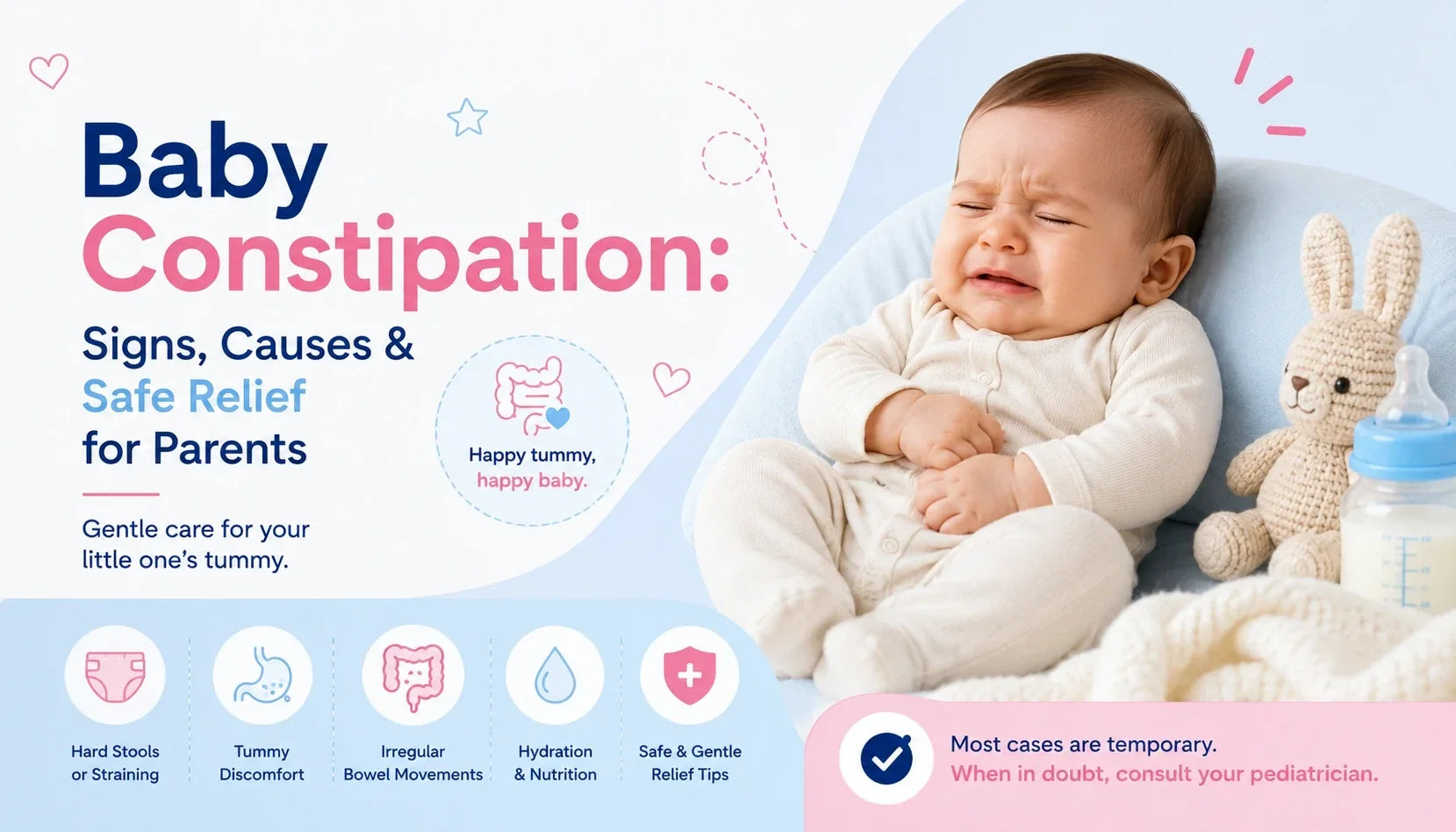
قد يكون رؤية طفلك يجهد أو يبكي أو يعاني أثناء التبرز أمرًا مقلقًا لأي والد. من الطبيعي أن تتساءل عما إذا كان طفلك مصابًا بالإمساك أو ما إذا كانت عادات التبرز لديه تتغير ببساطة مع نموه. والخبر السار هو أن الأطفال لا يتبعون جميعًا نفس النمط، وليس كل حفاض لم يُغير يعني الإمساك.
قد يتبرز بعض الأطفال حديثي الولادة الأصحاء عدة مرات في اليوم، بينما قد يمر البعض الآخر، وخاصة الأطفال الذين يرضعون رضاعة طبيعية بعد الأسابيع القليلة الأولى، عدة أيام دون التبرز ولا يزالون بصحة جيدة تمامًا. ما يهم أكثر ليس عدد مرات تبرز طفلك، بل ما إذا كان يبدو مرتاحًا وما إذا كانت برازه لا يزال لينًا.
يشرح هذا الدليل كيفية التعرف على علامات إمساك الرضع، وما هي أسبابه الشائعة، والطرق الآمنة لتوفير الراحة، ومتى يكون من المهم التحدث مع طبيب الأطفال الخاص بك.
ما هو إمساك الرضع؟
يحدث الإمساك عندما يصبح التبرز صعبًا، أو غير متكرر وفقًا لنمط طفلك الطبيعي، أو ينتج عنه براز صلب وجاف. بينما لكل طفل روتينه الخاص، يتم تحديد الإمساك عادةً من خلال قوام البراز وليس عدد الحفاضات.
على سبيل المثال، الطفل الذي يتبرز برازًا لينًا مرة كل يومين قد لا يكون مصابًا بالإمساك، بينما طفل آخر يتبرز برازًا صغيرًا وصلبًا يوميًا قد يكون يعاني من الإمساك.
العلامات الشائعة للإمساك عند الرضع
قد يكون طفلك مصابًا بالإمساك إذا لاحظت واحدة أو أكثر من العلامات التالية:
- براز صلب، جاف، أو يشبه الحصى.
- صعوبة أو ألم أثناء التبرز.
- إجهاد لعدة دقائق مع نتيجة قليلة.
- بكاء أثناء التبرز.
- بطن منتفخ أو صلب.
- نقص الشهية.
- التهيج الذي يتحسن بعد التبرز.
من المهم أن نتذكر أن الأطفال غالبًا ما يجهدون، ويحمر وجههم، أو يصدرون أصواتًا أثناء تعلمهم تنسيق عضلاتهم. إذا كان البراز لينًا، فإن هذا عادة ما يكون جزءًا طبيعيًا من التطور وليس إمساكًا.
ما الذي يسبب إمساك الرضع؟
١. التغيّرات في الرضاعة
تعد التغيرات في الرضاعة أحد الأسباب الأكثر شيوعًا للإمساك المؤقت. قد يحدث هذا عند إدخال حليب الأطفال الصناعي، أو تغيير أنواع الحليب الصناعي، أو البدء في الأطعمة الصلبة.
إذا غير طفلك الحليب الصناعي مؤخرًا، فامنحه بعض الوقت للتكيف ما لم يُنصح بخلاف ذلك من قبل طبيب الأطفال الخاص بك. قد يؤدي تغيير الحليب الصناعي بشكل متكرر دون توجيه طبي إلى صعوبة تحديد سبب المشكلة.
إذا كنت تختار حليبًا صناعيًا لطفلك، فإن دليلنا حول أفضل حليب أطفال في قطر يشرح الأنواع المختلفة المتاحة وما يجب على الوالدين مراعاته قبل اتخاذ القرار.
٢. البدء بالأكل الصلب
عندما يبدأ الأطفال في تناول الأطعمة الصلبة، يتكيف جهازهم الهضمي مع القوام والعناصر الغذائية الجديدة. خلال هذه الفترة الانتقالية، قد يصبح التبرز مؤقتًا أكثر صلابة أو أقل تكرارًا.
يساعد إدخال الأطعمة الجديدة تدريجيًا وتقديم مجموعة متنوعة ومتوازنة من الأطعمة المناسبة للعمر غالبًا في دعم الهضم الصحي.
٣. الجفاف الخفيف
قد يصاب الأطفال الذين لا يتناولون كمية كافية من السوائل ببراز أكثر صلابة لأن الجسم يمتص المزيد من الماء من الأمعاء. يمكن أن يحدث هذا أحيانًا خلال الطقس الحار أو المرض أو التغيرات في أنماط الرضاعة.
إذا لاحظت عددًا أقل من الحفاضات المبللة أو بدا أن طفلك أقل اهتمامًا بالرضاعة من المعتاد، فتحدث مع مقدم الرعاية الصحية الخاص بك للحصول على التوجيه.
٤. التكيّف الهضمي المؤقت
يستمر الجهاز الهضمي للطفل في التطور طوال السنة الأولى من العمر. يمكن أن تحدث تغيرات مؤقتة في عادات التبرز خلال طفرات النمو أو فترات الانتقال في الرضاعة أو التغيرات الروتينية.
تتحسن معظم هذه التغيرات بشكل طبيعي مع مرور الوقت ولا تشير إلى مشكلة طبية كامنة.
الإمساك لدى الأطفال الذين يرضعون رضاعة طبيعية مقابل الأطفال الذين يرضعون حليبًا صناعيًا
غالبًا ما يكون للأطفال الذين يرضعون رضاعة طبيعية والذين يرضعون حليبًا صناعيًا أنماط تبرز مختلفة.
عادة ما ينتج الأطفال الذين يرضعون رضاعة طبيعية برازًا أكثر ليونة لأن حليب الأم سهل الهضم. بعد الشهر الأول، قد يمر بعض الأطفال الأصحاء الذين يرضعون رضاعة طبيعية عدة أيام دون التبرز، بشرط أن يظل البراز لينًا وأن يرضع الطفل وينمو بشكل جيد.
عادة ما يكون لدى الأطفال الذين يرضعون حليبًا صناعيًا تبرز أكثر انتظامًا، وقد يكون برازهم أكثر صلابة قليلاً. ومع ذلك، لا ينبغي اعتبار البراز الصلب باستمرار أو التبرز المؤلم أمرًا طبيعيًا.
إذا كان طفلك غير مرتاح بعد الرضاعة ويعاني من صعوبة في التبرز، فقد تجد مقالنا حول مشاكل رضاعة الأطفال مفيدًا أيضًا، حيث يمكن أن تتداخل تحديات الرضاعة أحيانًا مع عدم الراحة الهضمية.
طرق آمنة للمساعدة في تخفيف إمساك الرضع
يمكن معالجة معظم حالات الإمساك الخفيفة بالرعاية الداعمة البسيطة مع مراقبة راحة طفلك. تجنب إعطاء العلاجات المنزلية أو الملينات التي لا تستلزم وصفة طبية ما لم يوصي بها طبيب الأطفال الخاص بك على وجه التحديد.
قد تساعد الأساليب اللطيفة التالية طفلك على الشعور براحة أكبر:
- استمر في إرضاع طفلك بانتظام لدعم الترطيب.
- حرك ساقي طفلك بلطف بحركة تشبه الدراجة لتشجيع حركة الأمعاء الطبيعية.
- امنح طفلك وقتًا على البطن تحت الإشراف إذا كان جاهزًا من الناحية التنموية، حيث قد تساعد الحركة في تحفيز الهضم.
- دلك بطن طفلك بلطف في اتجاه عقارب الساعة باستخدام ضغط خفيف.
- إذا كان طفلك قد بدأ بالفعل في تناول الأطعمة الصلبة، فقدمي الأطعمة المناسبة للعمر التي تدعم الهضم الصحي، حسب نصيحة طبيب الأطفال الخاص بك.
تجنب إعطاء الماء أو عصير الفاكهة أو العلاجات العشبية أو الملينات للأطفال الصغار ما لم يوصي بها أخصائي الرعاية الصحية الخاص بك على وجه التحديد.
هل يمكن أن تحدث الزجاجة أو طريقة الرضاعة فرقًا؟
لا يحدث الإمساك نفسه عادة بسبب زجاجة الرضاعة. ومع ذلك، فإن روتين الرضاعة بشكل عام، وتحضير الحليب الصناعي، ونمط رضاعة طفلك يمكن أن تسهم أحيانًا في عدم الراحة الهضمية.
قم دائمًا بتحضير حليب الأطفال الصناعي تمامًا وفقًا لتعليمات الشركة المصنعة. يمكن أن يؤدي استخدام الكثير من مسحوق الحليب الصناعي إلى رضعة أكثر تركيزًا، مما قد يؤثر على الهضم.
إذا كنت ترضع بالزجاجة، فإن اختيار زجاجة أطفال مريحة مع تدفق حلمة مناسب قد يساعد أيضًا في تقليل الهواء الذي يتم بلعه أثناء الرضاعة، مما يدعم تجربة رضاعة أكثر راحة.
متى يجب عليك الاتصال بطبيب الأطفال الخاص بك؟
على الرغم من أن الإمساك العرضي شائع، إلا أن بعض الحالات تتطلب تقييمًا طبيًا.
اتصل بطبيب الأطفال الخاص بك إذا كان طفلك:
- يعاني من إمساك يستمر عدة أيام دون تحسن.
- يتبرز دمًا مع البراز.
- يعاني من انتفاخ شديد في البطن.
- يتقيأ بشكل متكرر.
- يرفض عدة رضعات.
- يعاني من ضعف في زيادة الوزن.
- يبدو نعسانًا بشكل غير عادي أو يصعب إيقاظه.
- يصاب بحمى مصاحبة للإمساك.
إذا كان طفلك يعاني من حمى، فإن مراقبة درجة حرارته باستخدام ميزان حرارة أطفال موثوق به قبل الاتصال بمقدم الرعاية الصحية الخاص بك يمكن أن يوفر معلومات مفيدة أثناء التقييم.
كيفية المساعدة في منع الإمساك
لا يمكن منع كل حالة إمساك، ولكن بعض العادات الصحية قد تساعد في دعم الهضم الطبيعي مع نمو طفلك.
- حضر الحليب الصناعي تمامًا حسب التوجيهات.
- قدم الأطعمة الجديدة تدريجيًا أثناء الفطام.
- قدم مجموعة متنوعة ومتوازنة من الأطعمة المناسبة للعمر بمجرد بدء الأطعمة الصلبة.
- شجع الحركة المنتظمة ووقت البطن تحت الإشراف.
- تجنب تغيير الحليب الصناعي بشكل متكرر ما لم يوصي به طبيب الأطفال الخاص بك.
إذا كان طفلك يبدأ في الرضاعة التكميلية، فقد تستمتع أيضًا بقراءة دليلنا حول كيف ومتى تبدأ فطام الطفل، والذي يشرح كيفية إدخال الأطعمة الجديدة تدريجيًا.
الأسئلة المتكررة
كيف يمكنني معرفة ما إذا كان طفلي يعاني من الإمساك؟
يُعرف الإمساك عادة بالبراز الصلب والجاف الذي يصعب أو يؤلم إخراجه. ليس الإجهاد وحده يعني دائمًا الإمساك، خاصة إذا ظل البراز لينًا.
هل من الطبيعي أن يمر الأطفال الذين يرضعون رضاعة طبيعية عدة أيام دون التبرز؟
نعم. بعد الأسابيع القليلة الأولى، قد يمر بعض الأطفال الأصحاء الذين يرضعون رضاعة طبيعية عدة أيام دون التبرز لأن حليب الأم يُهضم بكفاءة عالية. طالما أن البراز لين وأن طفلك يرضع وينمو جيدًا، فهذا غالبًا ما يكون طبيعيًا.
هل يمكن أن يتسبب تغيير الحليب الصناعي في الإمساك؟
يعاني بعض الأطفال من تغيرات هضمية مؤقتة بعد تغيير الحليب الصناعي. لا يوصى عادة بتغيير الحليب الصناعي بشكل متكرر ما لم يوصي به طبيب الأطفال الخاص بك.
هل يجب أن أعطي طفلي الماء لعلاج الإمساك؟
يجب عدم إعطاء الأطفال الصغار الماء أو العلاجات المنزلية ما لم يوصي بها مقدم الرعاية الصحية الخاص بك. اتبع نصيحة طبيب الأطفال الخاص بك بناءً على عمر طفلك وطريقة الرضاعة.
متى يجب أن أقلق بشأن الإمساك؟
اطلب المشورة الطبية إذا كان الإمساك مصحوبًا بالتقيؤ أو الدم في البراز أو الحمى أو سوء الرضاعة أو انتفاخ البطن الكبير أو ضعف زيادة الوزن.