


لماذا يبكي طفلي بعد كل رضعة؟ الأسباب والحلول للوالدين في قطر
هل يبكي طفلك بعد كل رضعة؟ اكتشفي الأسباب الأكثر شيوعًا، وتقنيات التهدئة البسيطة، والعلامات التي قد تتطلب استشارة طبيب الأطفال.
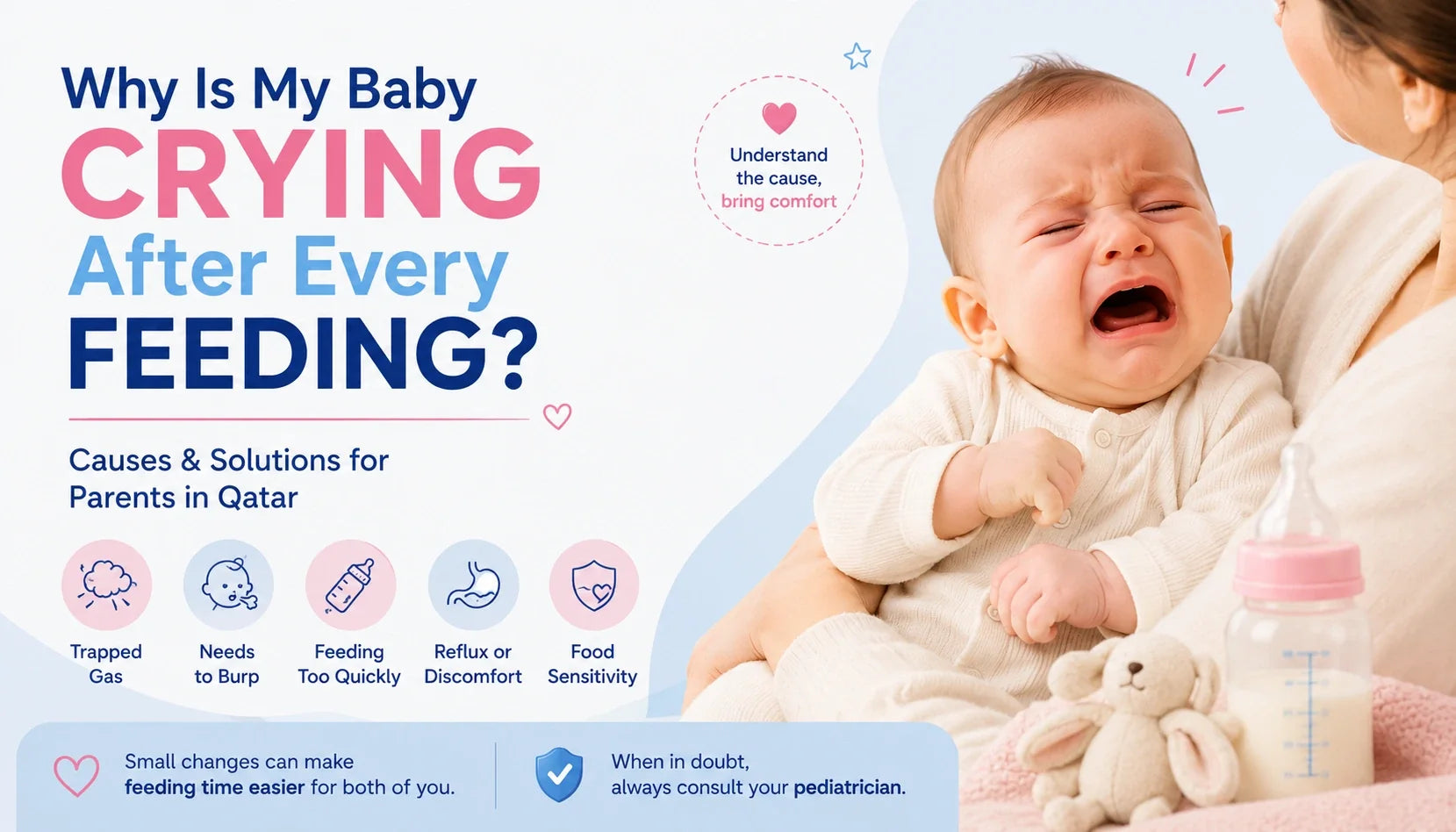
القليل من الأمور تثير قلق الأهل أكثر من طفل يبكي بعد كل رضعة. تقضين وقتًا في تحضير الزجاجة أو الاستعداد للرضاعة الطبيعية، وينتهي طفلك من الأكل، وبدلاً من أن يبدو هادئًا وراضيًا، يبدأ في البكاء. قد يجعلك هذا تتساءلين عما إذا كان لا يزال جائعًا، أو يتألم، أو يحاول أن يخبرك بأن هناك شيئًا خاطئًا.
الخبر السار هو أن البكاء بعد الرضاعة أمر شائع جدًا، خاصة خلال الأشهر القليلة الأولى من العمر. في كثير من الحالات، يكون السبب مؤقتًا ويمكن التعامل معه بتعديلات صغيرة على روتين تغذية طفلك. فهم سبب بكاء طفلك بعد الرضاعة هو الخطوة الأولى نحو جعل وقت الرضاعة أكثر راحة لكما.
في هذا الدليل، سنشرح الأسباب الأكثر شيوعًا لبكاء الأطفال بعد الرضاعة، والطرق العملية للمساعدة في تهدئتهم، ومتى يحين الوقت لطلب المشورة من طبيب الأطفال الخاص بك.
هل من الطبيعي أن يبكي الأطفال بعد الرضاعة؟
نعم، البكاء العرضي بعد الرضاعة أمر طبيعي تمامًا. لا يزال الأطفال حديثو الولادة يتعلمون كيفية تنسيق المص والبلع والهضم، بينما يستمر جهازهم الهضمي في النضج خلال الأشهر القليلة الأولى.
قد يعاني بعض الأطفال من الانزعاج لبضع دقائق قبل أن يهدأوا، بينما يبكي آخرون لأنهم بحاجة إلى التجشؤ، أو لديهم غازات محتبسة، أو يرغبون ببساطة في الراحة بعد الرضاعة. المفتاح هو البحث عن الأنماط بدلاً من افتراض أن كل بكاء يعني شيئًا خطيرًا.
إذا كان طفلك يرضع جيدًا، وينتج حفاضات مبللة بانتظام، ويزداد وزنه بشكل مناسب، ويهدأ بعد فترة قصيرة، فإن البكاء العرضي عادة لا يدعو للقلق.
أسباب شائعة لبكاء طفلك بعد كل رضعة
١. الغازات المحبوسة
أحد الأسباب الأكثر شيوعًا لبكاء الأطفال بعد الرضاعة هو الغازات المحتبسة. أثناء الرضاعة الطبيعية أو الرضاعة بالزجاجة، يبتلع الأطفال كميات صغيرة من الهواء بشكل طبيعي. عندما يحتبس هذا الهواء في المعدة، يمكن أن يسبب ضغطًا وعدم راحة.
قد تلاحظين على طفلك:
- سحب ساقيه نحو بطنه.
- تقوس ظهره.
- التملص بعد الرضاعة.
- إخراج الغازات بشكل متكرر.
- الاستقرار بعد التجشؤ بفترة قصيرة.
التجشؤ لطفلك أثناء وبعد كل رضعة غالبًا ما يساعد في إخراج الهواء المحتبس. إذا كنت ترضعين بالزجاجة، فإن اختيار زجاجة الرضاعة المناسبة ومطابقتها مع تدفق حلمة الزجاجة الصحيح يمكن أن يقلل أيضًا من كمية الهواء التي يبتلعها طفلك.
إذا كان طفلك الصغير يبدو غير مرتاح بشكل رئيسي أثناء الرضعات الليلية، فقد تجدين أيضًا دليلنا حول الغازات عند حديثي الولادة ليلًا: الأسباب ونصائح للتخفيف للآباء في قطر مفيدًا.
٢. البيبي يحتاج يتجشأ
ليس كل طفل يتجشأ فورًا بعد الرضاعة. يحتاج بعضهم إلى عدة دقائق من التربيت اللطيف أو أوضاع تجشؤ مختلفة قبل أن يخرج الهواء المحتبس.
جربي حمل طفلك:
- فوق كتفك.
- جالسًا بشكل مستقيم على حجرك.
- وجهه للأسفل على حجرك مع دعم رأسه.
البقاء في وضع مستقيم لمدة 15 إلى 20 دقيقة بعد الرضاعة قد يساعد أيضًا الأطفال الذين يميلون إلى ابتلاع المزيد من الهواء.
٣. الرضاعة بسرعة وايد
إذا تدفق الحليب بسرعة كبيرة، قد يشرب الأطفال بشكل أسرع مما يمكن لجهازهم الهضمي التعامل معه بشكل مريح. قد يؤدي ذلك إلى البلع السريع، وابتلاع الهواء، والسعال، أو الانزعاج بعد الرضاعة بفترة قصيرة.
بالنسبة للأطفال الذين يرضعون بالزجاجة، تحققي مما إذا كان تدفق الحلمة يتناسب مع عمر طفلك ونمط رضاعته. حلمة سريعة جدًا يمكن أن تجعل الرضاعة صعبة، بينما حلمة بطيئة جدًا قد تسبب الإحباط وابتلاع الهواء الزائد.
إذا لم تكوني متأكدة مما إذا كانت معدات الرضاعة تساهم في المشكلة، فإن مقالنا حول أفضل زجاجات الأطفال في قطر يشرح كيف يمكن لتصميم الزجاجة أن يؤثر على راحة الرضاعة.
٤. الرضاعة الزايدة
أحيانًا يستمر الأطفال في المص للراحة حتى بعد أن يشبعوا. يمكن أن يحدث هذا أثناء الرضاعة الطبيعية والرضاعة بالزجاجة.
علامات تدل على أن طفلك قد شبع بالفعل تشمل:
- إدارة رأسه بعيدًا.
- إرخاء يديه.
- تباطؤ المص.
- دفع الزجاجة بعيدًا.
- النوم أثناء الرضاعة.
تعلم إشارات الجوع والشبع لدى طفلك يساعد على تجنب الانزعاج غير الضروري بعد الرضاعة. إذا لم تكوني متأكدة من عدد المرات التي يجب أن يأكل فيها طفلك، اقرئي دليلنا حول كم مرة يجب إطعام الطفل؟.
٥. الارتجاع
يعاني بعض الأطفال من الارتجاع المريئي المعدي، حيث تتدفق كميات صغيرة من الحليب مرة أخرى إلى المريء بعد الرضاعة. الارتجاع الخفيف شائع خلال فترة الرضاعة لأن العضلة بين المعدة والمريء لا تزال تتطور.
قد يظهر على الأطفال الذين يعانون من الارتجاع:
- البكاء بعد الرضاعة بفترة قصيرة.
- التقيؤ المتكرر.
- تقوس الظهر.
- عدم الاستقرار عند الاستلقاء فورًا بعد الأكل.
إبقاء طفلك في وضع مستقيم لفترة قصيرة بعد الرضاعة قد يقلل من أعراض الارتجاع الخفيف. ومع ذلك، يجب دائمًا مناقشة الانزعاج المستمر أو ضعف زيادة الوزن مع طبيب الأطفال الخاص بك.
٦. المغص
إذا كان طفلك يبكي بشدة لفترات طويلة، خاصة في المساء، فقد يكون المغص يساهم في المشكلة. على الرغم من أن السبب الدقيق غير مفهوم تمامًا، إلا أن المغص عادة ما يبدأ خلال الأسابيع القليلة الأولى من الحياة ويتحسن تدريجيًا بحلول حوالي ثلاثة إلى أربعة أشهر.
بكاء المغص غالبًا ما يحدث حتى عندما يكون الأطفال قد شبعوا جيدًا وجافين وبصحة جيدة بخلاف ذلك. قد يساعد الهدهدة اللطيفة، والتقميط، والضوضاء البيضاء، أو بيئة الرضاعة الهادئة في تهدئة بعض الأطفال، على الرغم من أن كل طفل يستجيب بشكل مختلف.
٧. الحساسية الغذائية أو عدم تحمّل الحليب الصناعي
قد يكون بعض الأطفال أكثر حساسية لمكونات معينة في الحليب الصناعي، على الرغم من أن الحساسيات الحقيقية أقل شيوعًا مما يعتقده العديد من الآباء. إذا بدا طفلك غير مرتاح بعد الرضعات، أو يعاني من إسهال مستمر، أو إمساك، أو أكزيما، أو براز غير عادي، أو انزعاج مفرط، فمن الجدير مناقشة هذا الأمر مع طبيب الأطفال الخاص بك قبل تغيير أنواع الحليب الصناعي.
غالبًا ما يتساءل الآباء الذين يستخدمون الرضاعة الصناعية عما إذا كان نوع مختلف من الحليب الصناعي يمكن أن يحسن الهضم. اعتمادًا على احتياجات طفلك، قد يقترح طبيبك حليبًا صناعيًا قياسيًا من حليب البقر، أو حليبًا صناعيًا من حليب الماعز، أو خيارًا متخصصًا.
إذا كنت تستكشفين خيارات الحليب الصناعي، فإن أدلتنا حول أفضل حليب صناعي للأطفال في قطر و حليب الماعز الصناعي للأطفال توفر معلومات مفيدة للآباء.
٨. التسنين أو التغيّرات في مراحل النمو
مع نمو الأطفال، تتغير أنماط الرضاعة بشكل طبيعي. يمكن أن يؤثر التسنين، والقفزات التنموية، وطفرات النمو، وزيادة الوعي بالعالم كله على سلوك الرضاعة.
يصبح بعض الأطفال مشتتين أثناء الرضاعة، بينما يرضع آخرون بشكل مختلف خلال فترات النمو السريع. إذا كان طفلك يبكي بعد الرضاعة ولكنه يبدو بخلاف ذلك بصحة جيدة ونشيطًا، فقد تكون التغيرات التنموية جزءًا من السبب.
قد تستمتعين أيضًا بقراءة مقالنا حول تشتت انتباه الطفل أثناء الرضاعة: كيفية تحسين التركيز.
طرق بسيطة لمساعدة الطفل الذي يبكي بعد الرضاعة
تتحسن العديد من تحديات الرضاعة بتعديلات صغيرة. جربي هذه النصائح العملية:
- جشئي طفلك أثناء وبعد الرضعات.
- أرضعي في بيئة هادئة وقليلة التشتت.
- اجعلي طفلك في وضع مستقيم لمدة 15-20 دقيقة بعد الرضاعة.
- تحققي من أن حلمات الزجاجات لديها معدل تدفق صحيح.
- تجنبي الإفراط في الرضاعة من خلال مراقبة إشارات الجوع والشبع.
- أرضعي طفلك قبل أن يصبح جائعًا جدًا.
- تأكدي من تنظيف الزجاجات ومعدات الرضاعة بشكل صحيح.
الحفاظ على نظافة معدات الرضاعة جزء مهم من الرضاعة الآمنة. إذا كنت تعبرين الحليب، فقد يكون دليلنا حول كيفية تنظيف مضخة الثدي مفيدًا أيضًا. يمكن للآباء الذين يستخدمون الزجاجات استكشاف مجموعتنا من معقمات الأطفال و أساسيات تنظيف الزجاجات للعناية اليومية بالرضاعة.
متى يجب على الآباء التحدث مع طبيب الأطفال؟
يبكي معظم الأطفال أحيانًا بعد الرضعات، وفي كثير من الحالات يتحسن الأمر بشكل طبيعي مع نضوج جهازهم الهضمي. ومع ذلك، هناك حالات يكون فيها الحصول على مشورة مهنية أمرًا مهمًا.
تحدثي مع طبيب الأطفال الخاص بك إذا كان طفلك:
- يظهر ضعفًا في زيادة الوزن.
- لديه دم في البراز.
- يتقيأ بقوة أو بشكل متكرر.
- يرفض الرضعات بشكل متكرر.
- يبكي بشدة بعد كل رضعة.
- يصاب بطفح جلدي أو علامات رد فعل تحسسي.
- يعاني من حمى أو يبدو مريضًا.
إذا كنت بحاجة إلى مراقبة درجة حرارة طفلك في المنزل، يمكنك أيضًا استكشاف مجموعتنا من مقاييس حرارة الأطفال.
الأسئلة المتكررة
لماذا يبكي طفلي فورًا بعد الرضاعة؟
تشمل الأسباب الشائعة الغازات المحتبسة، والارتجاع، والإفراط في الرضاعة، والرضاعة بسرعة كبيرة، والتسنين، أو الانزعاج الهضمي العام. غالبًا ما يساعد البحث عن الأنماط وتعديل روتين الرضاعة.
هل من الطبيعي أن يبكي الأطفال حديثو الولادة بعد كل رضعة؟
نعم، البكاء العرضي بعد الرضاعة شائع عند حديثي الولادة مع نضوج جهازهم الهضمي. ومع ذلك، يجب مناقشة البكاء المستمر المصحوب بضعف زيادة الوزن أو أعراض أخرى مع طبيب الأطفال.
هل يمكن أن تسبب الرضاعة بالزجاجة البكاء بعد الرضعات؟
أحيانًا. تدفق الحلمة السريع جدًا أو البطيء جدًا، أو ابتلاع الهواء، أو وضعية الرضاعة يمكن أن تؤثر على الراحة. استخدام زجاجات الأطفال و حلمات الزجاجات المناسبة قد يساعد في تحسين الرضاعة.
كيف يمكنني معرفة ما إذا كان طفلي يعاني من غازات محتبسة؟
قد يسحب الأطفال الذين يعانون من الغازات أرجلهم نحو بطنهم، أو يتملصون، أو يقوسون ظهورهم، أو يهدأون بعد التجشؤ أو إخراج الغازات.
متى يجب أن أقلق بشأن بكاء طفلي بعد الرضاعة؟
إذا كان البكاء شديدًا، أو مستمرًا، أو مصحوبًا بضعف زيادة الوزن، أو التقيؤ، أو الدم في البراز، أو الحمى، أو رفض الرضاعة، فاطلبي المشورة الطبية.