

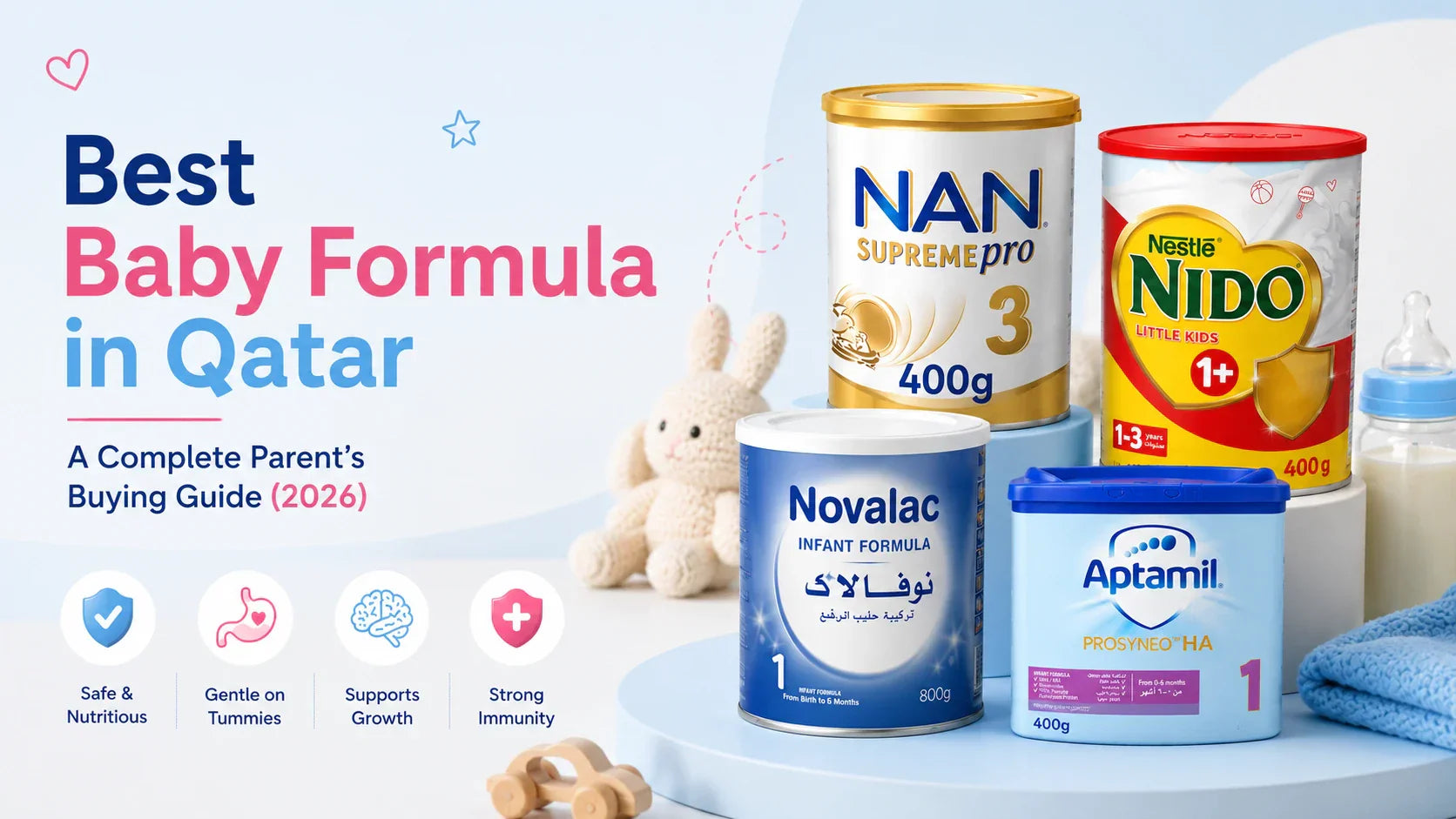
أفضل حليب أطفال في قطر: دليل الشراء الشامل للأهل لعام ٢٠٢٦
قد يكون اختيار أفضل حليب صناعي للرضع في قطر أمرًا مربكًا، خاصة للآباء الجدد. مع وجود العشرات من العلامات التجارية المتوفرة في الصيدليات ومحلات السوبر ماركت ومتاجر الأطفال، من الطبيعي أن تتساءل عن التركيبة الأكثر أمانًا، والأقرب إلى حليب الأم، والأكثر ملاءمة لاحتياجات طفلك.
بينما يظل حليب الأم هو المصدر الموصى به للتغذية كلما أمكن ذلك، يوفر الحليب الصناعي بديلاً آمنًا ومغذيًا كاملاً عندما لا تكون الرضاعة الطبيعية خيارًا أو عندما يختار الآباء التغذية المختلطة.
الخبر السار هو أن جميع تركيبات حليب الأطفال المعتمدة تجارياً والمباعة في قطر مصممة لتلبية معايير غذائية دولية صارمة. التحدي ليس في العثور على تركيبة "مثالية" - بل هو العثور على التركيبة التي تعمل بشكل أفضل لهضم طفلك واحتياجاته الغذائية ونمط حياته.
في هذا الدليل، سنشرح الأنواع المختلفة من حليب الأطفال الصناعي، وكيفية اختيار النوع المناسب، والأخطاء الشائعة التي يجب تجنبها، وما يجب على الآباء في قطر مراعاته قبل الشراء.
كيفية اختيار أفضل حليب صناعي للأطفال في قطر
كل طفل يختلف عن الآخر، مما يعني أنه لا توجد تركيبة واحدة هي الأفضل لكل طفل. قد يوصي طبيب الأطفال بنوع معين بناءً على صحة طفلك أو عمره أو هضمه أو حساسيته.
عند مقارنة التركيبات، ضع في اعتبارك:
- عمر طفلك (المرحلة 1 أو المرحلة 2 أو المرحلة 3)
- راحة الجهاز الهضمي
- نوع بروتين الحليب
- وجود الحساسية أو عدم تحمل اللاكتوز
- توصيات الطبيب
- التوفر في قطر
لا تغير التركيبات بشكل متكرر إلا إذا نصحك مقدم الرعاية الصحية بذلك. يحتاج الأطفال غالبًا إلى عدة أيام للتكيف مع تركيبة جديدة.
أنواع حليب الأطفال المتوفرة
١. حليب الأطفال الصناعي المصنوع من حليب البقر
هذا هو حليب الأطفال الصناعي الأكثر شيوعًا والموصى به عالميًا. على الرغم من أنه مصنوع من حليب البقر، فقد تم تعديل البروتين لجعله أسهل على الأطفال في الهضم.
وهو مناسب لمعظم الأطفال الأصحاء الذين ولدوا في الموعد المحدد ويحتوي على كميات متوازنة بعناية من البروتين والكربوهيدرات والدهون الصحية والفيتامينات والمعادن.
العديد من التركيبات الشائعة المتوفرة في قطر تندرج تحت هذه الفئة.
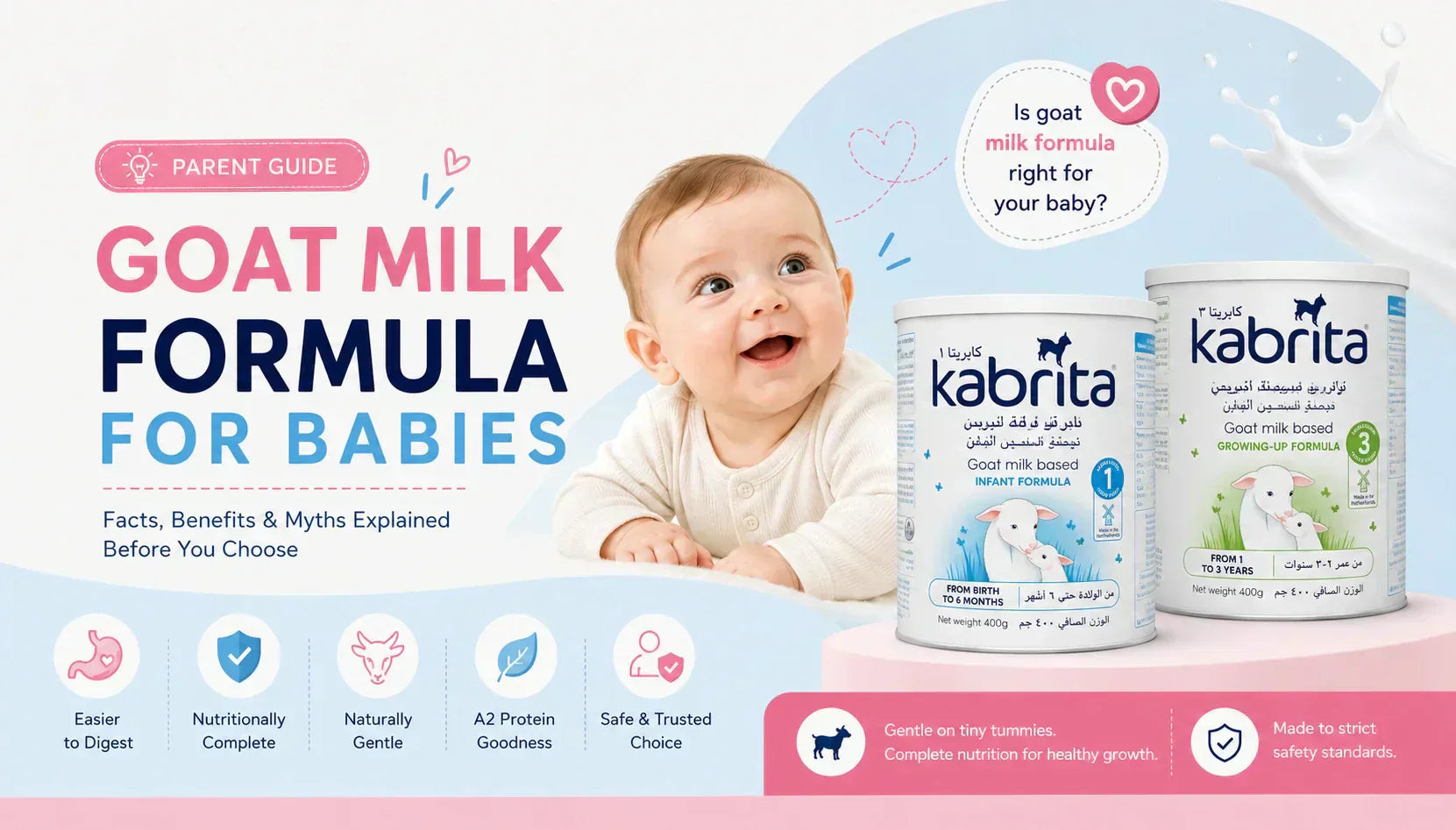
٢. حليب الأطفال الصناعي من حليب الماعز
أصبح حليب الماعز الصناعي شائعًا بشكل متزايد بين الآباء الذين يبحثون عن بديل لحليب البقر الصناعي التقليدي.
يهضم بعض الأطفال بروتين حليب الماعز بشكل أكثر راحة لأنه يشكل خثرة أكثر ليونة في المعدة. كما أن العديد من تركيبات حليب الماعز تحتوي بشكل طبيعي على بروتين بيتا كازين A2، والذي تفضله بعض العائلات.
ومع ذلك، فإن حليب الماعز الصناعي غير مناسب للأطفال الذين يعانون من حساسية مثبتة لبروتين حليب البقر، لأن البروتينات متشابهة جدًا.
إذا كنت تفكر في هذا الخيار، اقرأ دليلنا حول حليب الماعز للرضع: 5 حقائق يجب أن يعرفها كل والد.
٣. حليب الأطفال العضوي
يتم إنتاج التركيبات العضوية باستخدام مكونات مصدرها مزارع عضوية معتمدة ويتم تصنيعها بدون بعض المبيدات الحشرية أو الأسمدة الاصطناعية.
من الناحية الغذائية، توفر التركيبات العضوية نفس العناصر الغذائية الأساسية مثل التركيبات القياسية.
عادة ما يختارها الآباء بناءً على التفضيل الشخصي بدلاً من الضرورة الطبية.
٤. حليب أطفال خالي من اللاكتوز
تم تصميم التركيبات الخالية من اللاكتوز للأطفال الذين لا يستطيعون هضم اللاكتوز بشكل صحيح.
عدم تحمل اللاكتوز الحقيقي نادر للغاية عند حديثي الولادة. وعادة ما يوصى بهذه التركيبات فقط بعد التقييم الطبي.
٥. حليب أطفال مضاد للحساسية
إذا كان الطفل يعاني من حساسية مؤكدة لبروتين حليب البقر، غالبًا ما يوصي أطباء الأطفال بالتركيبات المتحللة بشكل واسع أو القائمة على الأحماض الأمينية.
تحتوي هذه التركيبات المتخصصة على بروتينات مقسمة إلى أجزاء أصغر بكثير، مما يقلل من احتمالية حدوث تفاعلات تحسسية.
يجب استخدامها فقط تحت إشراف طبي.
شرح حليب المرحلة ١ والمرحلة ٢ والمرحلة ٣
المرحلة ١ (من ٠ إلى ٦ شهور)
مصمم لتوفير تغذية كاملة للمواليد الجدد من الولادة لين عمر ٦ شهور.
المرحلة ٢ (من ٦ إلى ١٢ شهر)
غالبًا يُسمى حليب المتابعة، ويدعم البيبي لما يبدأ ياكل الأطعمة التكميلية.
المرحلة ٣ (من ١٢ شهر وفوق)
تركيبة الأطفال الصغار مخصصة للأطفال الذين تزيد أعمارهم عن عام واحد كجزء من نظام غذائي متوازن.
اختر دائمًا المرحلة الصحيحة بناءً على عمر طفلك ما لم ينصحك طبيب الأطفال بخلاف ذلك.
المكونات التي يجب على الآباء البحث عنها
تحتوي معظم تركيبات حليب الأطفال الفاخرة الآن على مكونات مصممة لتشبه حليب الأم عن كثب.
تشمل المكونات المفيدة:
- DHA و ARA لتنمية الدماغ والعين
- البريبايوتكس لدعم البكتيريا المعوية الصحية
- البروبيوتكس لصحة الجهاز الهضمي
- النيوكليوتيدات التي تدعم وظيفة المناعة
- الحديد لنمو وتطور صحي
- فيتامين د والكالسيوم لتقوية العظام
- أحماض أوميغا ٣ الدهنية
ليس كل طفل يحتاج إلى كل مكون إضافي. ركز على اختيار تركيبة يتحملها طفلك جيدًا بدلاً من مطاردة قوائم المكونات الطويلة.
علامات قد تدل على أن طفلك يحتاج إلى تركيبة مختلفة
يتكيف بعض الأطفال بسرعة، بينما قد يحتاج آخرون إلى نوع مختلف من التركيبة.
تحدث مع طبيب الأطفال إذا كان طفلك يعاني من:
- قيء مستمر بعد الرضاعة
- دم أو مخاط في البراز
- إمساك شديد
- إسهال مزمن
- ضعف في زيادة الوزن
- شعور مستمر بعدم الراحة بعد الرضاعة
- علامات رد فعل تحسسي
الغازات العرضية أو البصق الخفيف أمر شائع عند الرضع الأصحاء ولا يعني بالضرورة الحاجة إلى تغيير التركيبة.