

تركيبة حليب الماعز للرضع: 5 حقائق يجب أن يعرفها كل والد
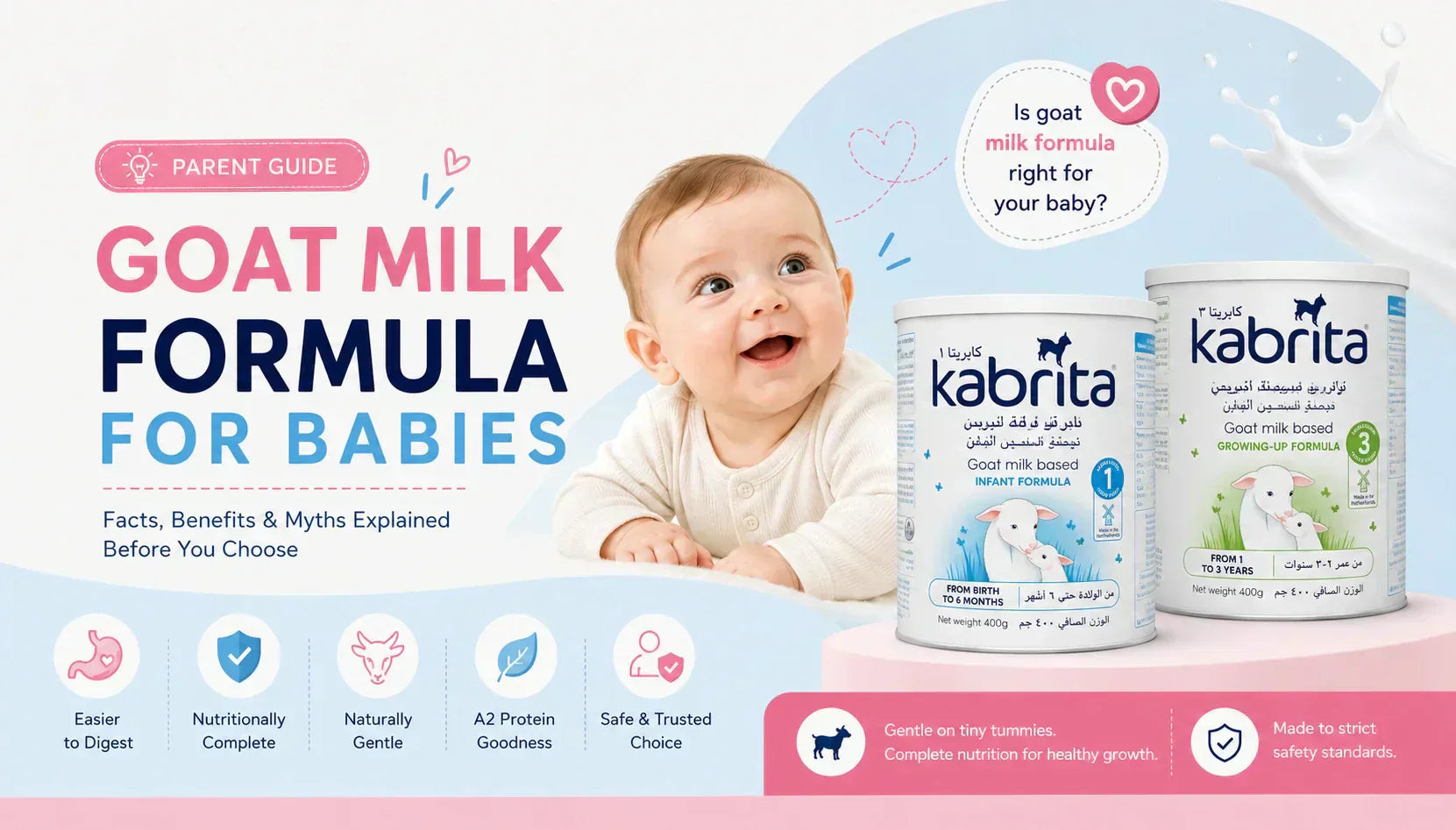
قد يكون اختيار تركيبة حليب الأطفال المناسبة أمراً مربكاً، خاصة عندما تحاولين العثور على الخيار الأفضل لهضم طفلك وصحته العامة. على مدى السنوات القليلة الماضية، أصبحت تركيبة حليب الماعز للأطفال شائعة بشكل متزايد بين الآباء الذين يبحثون عن بديل لتركيبة حليب البقر التقليدية.
يسمع العديد من الآباء أن تركيبة حليب الماعز "ألطف على المعدة"، ولكن هل هذا صحيح بالفعل؟ وهل هي مناسبة لكل طفل؟ وهل يجب عليك التحول إليها إذا كان طفلك يعاني من الغازات أو الإمساك أو عدم الراحة الهضمية الخفيفة؟
في هذا الدليل، سنفصل الحقائق عن الخرافات ونشرح كل ما تحتاج لمعرفته قبل اختيار تركيبة حليب الماعز. وبحلول النهاية، سيكون لديك فهم أوضح بكثير لما إذا كانت هي الخيار المناسب لطفلك.
ما هي تركيبة حليب الماعز؟
تركيبة حليب الماعز هي تركيبة حليب أطفال مصنعة باستخدام حليب الماعز كمصدر رئيسي للألبان. ومع ذلك، فهي ليست ببساطة حليب ماعز طازج يسكب في زجاجة.
تُعدل تركيبات حليب الأطفال التجارية خصيصًا لتلبية معايير غذائية صارمة. وتحتوي على كميات متوازنة بعناية من:
- البروتين
- الدهون الصحية
- الكربوهيدرات
- الفيتامينات الأساسية
- المعادن
- DHA و ARA (في العديد من التركيبات)
- الحديد والعناصر الغذائية الهامة الأخرى
وهذا يعني أن تركيبة حليب الماعز المصنعة بشكل صحيح توفر تغذية كاملة للأطفال الأصحاء خلال فترة الرضاعة، تمامًا مثل تركيبات حليب البقر القياسية.
حقيقة رقم 1: قد تكون تركيبة حليب الماعز أسهل في الهضم
أحد أكبر الأسباب التي تجعل الآباء يختارون تركيبة حليب الماعز هو الهضم.
يشكل حليب الماعز بشكل طبيعي خثارات أكثر ليونة وأصغر في المعدة من حليب البقر. قد تتحرك هذه الخثارات الأكثر ليونة عبر الجهاز الهضمي بسهولة أكبر، مما قد يساعد بعض الأطفال على الشعور براحة أكبر بعد الرضاعة.
يبلغ العديد من الآباء عن تحسن في:
- الغازات الخفيفة
- الانتفاخ
- عدم الراحة في البطن
- الإمساك العرضي
- الراحة العامة عند الرضاعة
سبب آخر هو أن العديد من تركيبات حليب الماعز تحتوي بشكل طبيعي على نسبة أعلى من بروتين A2، بينما تحتوي العديد من تركيبات حليب البقر على كل من بروتينات A1 و A2.
على الرغم من أن البحث لا يزال مستمرًا، يبدو أن بعض الأطفال يهضمون بروتينات A2 بشكل أكثر راحة.
ومع ذلك، كل طفل يختلف عن الآخر. وقد لا تكون التركيبة التي تعمل بشكل جيد لطفل واحد بالضرورة مناسبة لطفل آخر.
حقيقة رقم 2: تركيبة حليب الماعز كاملة من الناحية الغذائية
من المفاهيم الخاطئة الشائعة أن تركيبة حليب الماعز تفتقر إلى العناصر الغذائية الهامة.
في الواقع، تخضع تركيبات حليب الأطفال الحديثة لتعديلات غذائية واسعة النطاق قبل وصولها إلى السوق.
تحتوي تركيبات حليب الماعز عالية الجودة على:
- الحديد
- فيتامين د
- الكالسيوم
- فيتامين ج
- حمض الفوليك
- الدهون الصحية
- الأحماض الأمينية الأساسية
- أحماض أوميغا الدهنية في العديد من التركيبات الفاخرة
عند التحضير بشكل صحيح، تدعم هذه التركيبات نمو الرضع وتطورهم الصحي بشكل كامل.
المفتاح هو اختيار تركيبة حليب أطفال تفي بمعايير السلامة والتغذية الدولية المعترف بها.
حقيقة رقم 3: تركيبة حليب الماعز ليست مناسبة للأطفال الذين يعانون من حساسية بروتين حليب البقر
ربما تكون هذه هي أهم حقيقة يسيء فهمها العديد من الآباء.
على الرغم من أن حليب الماعز يختلف عن حليب البقر، إلا أن البروتينات لا تزال متشابهة جدًا.
إذا كان طفلك يعاني من حساسية بروتين حليب البقر (CMPA)، فإن التحول إلى تركيبة حليب الماعز دون استشارة طبية لا يُنصح به عادة لأن العديد من الأطفال يتفاعلون مع كلا النوعين من بروتينات الحليب.
غالبًا ما يخلط الآباء بين:
- الحساسية الهضمية
- عدم تحمل اللاكتوز
- حساسية بروتين حليب البقر
هذه حالات مختلفة تمامًا.
إذا ظهرت على طفلك أعراض مثل:
- دم في البراز
- إكزيما مستمرة
- التقيؤ
- صعوبة في التنفس
- تفاعلات حساسية شديدة
استشر طبيب الأطفال دائمًا قبل تغيير التركيبات.
أسئلة متكررة حول تركيبة حليب الماعز
هل تركيبة حليب الماعز آمنة للأطفال؟
نعم. تركيبة حليب الماعز التجارية المحضرة التي تلبي معايير تغذية الرضع الدولية آمنة للأطفال الأصحاء. وهي مصممة خصيصًا بالفيتامينات والمعادن والحديد والعناصر الغذائية التي يحتاجها الأطفال خلال فترة الرضاعة. ومع ذلك، يجب عدم إعطاء حليب الماعز الطازج للرضع الذين تقل أعمارهم عن عام واحد.
هل تركيبة حليب الماعز أسهل في الهضم من تركيبة حليب البقر؟
يجد العديد من الآباء أن تركيبة حليب الماعز ألطف على معدة أطفالهم لأنها تشكل خثارات أكثر ليونة أثناء الهضم وتحتوي بشكل طبيعي على المزيد من بروتين A2. بينما يعاني بعض الأطفال من غازات أو إمساك أقل، يختلف كل طفل عن الآخر، لذلك قد تختلف النتائج.
هل يمكنني التحول من تركيبة حليب البقر إلى تركيبة حليب الماعز؟
نعم، يمكن للعديد من الأطفال الأصحاء التحول بنجاح. ومع ذلك، إذا كان طفلك يعاني من حساسية بروتين حليب البقر المشخصة أو أي حالة طبية أخرى، استشر طبيب الأطفال دائمًا قبل تغيير التركيبات.
هل تحتوي تركيبة حليب الماعز على اللاكتوز؟
نعم. يحتوي حليب الماعز بشكل طبيعي على اللاكتوز، لذلك فهو غير مناسب للأطفال الذين يعانون من عدم تحمل اللاكتوز ما لم ينصح به أخصائي رعاية صحية.
أيهما أفضل: تركيبة حليب الماعز أم تركيبة حليب البقر؟
لا يوجد أحدهما أفضل عالميًا. تظل تركيبة حليب البقر خيارًا ممتازًا للعديد من الأطفال، بينما قد تناسب تركيبة حليب الماعز الرضع الذين يعانون من عدم راحة هضمية خفيفة مع التركيبة القياسية. يعتمد الخيار الأفضل على الاحتياجات الفردية لطفلك ونصيحة طبيب الأطفال.
ما الذي يجب أن أبحث عنه عند شراء تركيبة حليب الماعز؟
اختر تركيبة تفي بمعايير السلامة المعترف بها، ومناسبة لعمر طفلك، وتحتوي على العناصر الغذائية الأساسية مثل الحديد، وDHA (حيثما ينطبق)، والفيتامينات والمعادن. اشترِ حليب الأطفال دائمًا من تجار التجزئة الموثوق بهم.
مقالات ذات صلة
- أفضل مضخة ثدي في قطر: دليل شراء كامل للأمهات الجدد والأمهات العاملات
- مضخة الثدي اليدوية مقابل مضخة الثدي الكهربائية: أيهما الأنسب لك؟
- مضخة الثدي القابلة للارتداء: دليل شراء كامل للأمهات في قطر
- كيفية تخزين حليب الأم المعصور بأمان
- كيفية تنظيف مضخة الثدي: دليل خطوة بخطوة للآباء
أفكار أخيرة
يعد اختيار التركيبة المناسبة أحد القرارات الهامة العديدة التي ستتخذها كوالد. بينما أصبحت تركيبة حليب الماعز للأطفال شائعة بشكل متزايد بسبب فوائدها الهضمية المحتملة، إلا أنها ليست الخيار الأفضل تلقائيًا لكل رضيع. سيساعدك فهم احتياجات طفلك الغذائية، ومراقبة استجابته للرضعات، وطلب المشورة المهنية عند الضرورة، على اتخاذ القرار الأكثر استنارة.
إذا كنت تفكر في تغيير التركيبات، أدخل التركيبة الجديدة تدريجيًا (ما لم ينصح مقدم الرعاية الصحية بخلاف ذلك) وراقب رضاعة طفلك وهضمه وراحته العامة. باختيارك الصحيح، يمكنك دعم النمو الصحي مع جعل وقت الرضاعة أكثر راحة لك ولصغيرك.